Kangjian Kangjian

Why Choose Rod Aluminum for Your Manufacturing Needs?

Time:2026-06-12 Author:Isabella
0%

When considering materials for manufacturing, Rod Aluminum stands out for its exceptional qualities. Industry expert Dr. Emily Chen emphasizes, "Rod Aluminum is a reliable choice for strength and versatility." This lightweight material offers excellent corrosion resistance and is favored in various applications. Many manufacturers rely on its durability to produce high-quality products.

However, it’s important to reflect on some limitations. Not every project requires Rod Aluminum. Certain designs may benefit from other materials. The decision should be based on specific needs and project demands. While Rod Aluminum is often praised, some experts advocate for a balanced approach in material selection.

Choosing Rod Aluminum can enhance efficiency but also requires careful consideration. Projects vary greatly in their requirements. Understanding these nuances is crucial for success. By weighing the benefits and reflecting on potential drawbacks, manufacturers can make informed decisions.
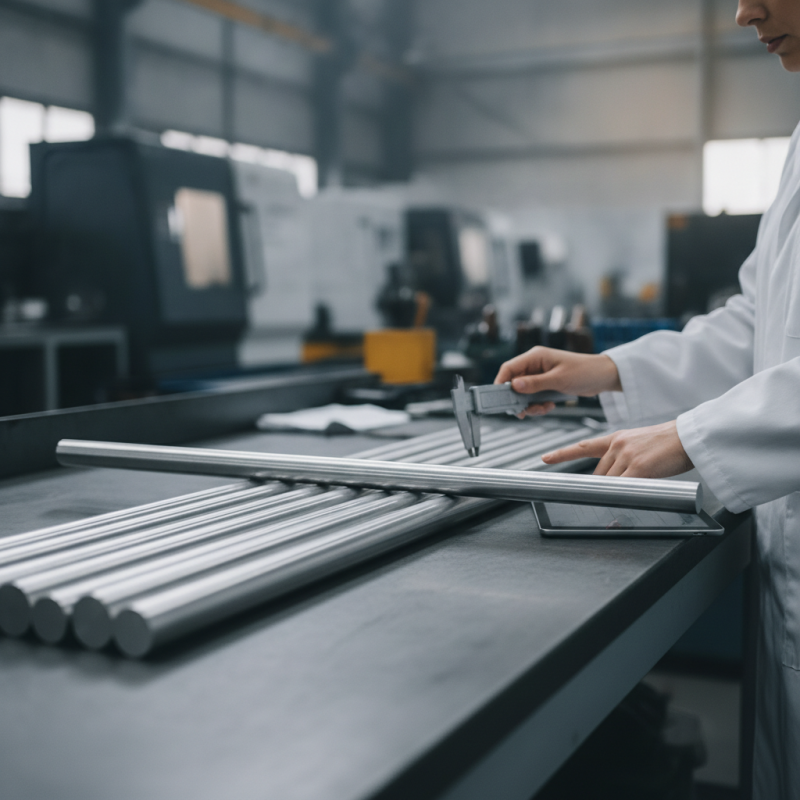
Why Choose Rod Aluminum for Your Manufacturing Needs?

Benefits of Using Rod Aluminum in Manufacturing Applications

Rod aluminum is increasingly favored in manufacturing for its unique properties. This lightweight metal demonstrates impressive strength-to-weight ratios, making it ideal for applications requiring both durability and reduced mass. According to the Aluminum Association, aluminum rods have a tensile strength of up to 300 MPa, showcasing their ability to withstand significant stress. This is a compelling advantage for industries like aerospace and automotive, where efficiency leads to better fuel economy.

In addition to strength, rod aluminum offers excellent corrosion resistance. This property is vital for components exposed to harsh environments. A report from the International Aluminum Institute indicates that aluminum's natural oxide layer provides protection, significantly reducing maintenance costs. Furthermore, the recyclability of aluminum enhances its sustainability. Using recycled aluminum can reduce energy consumption by up to 95% compared to producing new aluminum, according to a study by the U.S. Department of Energy.

However, not all applications are suited for rod aluminum. Some may find its cost higher than alternatives like steel, particularly in bulk production. Adjusting designs can be challenging as well, especially when transitioning from traditional materials. Despite these challenges, the benefits often outweigh the drawbacks for many sectors. The combination of lightweight, strength, and environmental benefits makes rod aluminum a formidable choice in modern manufacturing.

Comparative Analysis: Rod Aluminum vs. Other Materials

When evaluating materials for manufacturing, rod aluminum stands out for various reasons. Compared to steel, aluminum is significantly lighter. This translates into lower energy costs during transportation and handling. Steel offers strength but can be cumbersome for applications where weight is crucial. However, rod aluminum can bend under extreme loads, which requires careful consideration in design.

In contrast to plastic, aluminum has better thermal and electrical conductivity. This makes it preferable for applications requiring heat dissipation. Plastic, while versatile and affordable, often struggles with high-temperature environments. Yet, rod aluminum is susceptible to corrosion if not properly treated. This need for maintenance is an important factor to contemplate when deciding on aluminum versus plastic.

Moreover, aluminum is generally more sustainable. It can be recycled without losing its properties, unlike some materials. However, the initial processing of aluminum can be energy-intensive. Being aware of the environmental impact is essential. Each material has its pros and cons; understanding these nuances will guide better manufacturing choices.

Why Choose Rod Aluminum for Your Manufacturing Needs?

Material Type Density (g/cm³) Tensile Strength (MPa) Corrosion Resistance Cost ($/kg) Weight-to-Strength Ratio
Rod Aluminum 2.7 310 Excellent 3.00 High
Steel 7.8 400 Moderate 1.50 Moderate
Titanium 4.5 900 Excellent 30.00 Low
Carbon Fiber 1.8 600 Good 22.00 High

Applications of Rod Aluminum in Various Industries

Rod aluminum has become a preferred material in various industries due to its remarkable properties. The aerospace sector utilizes aluminum rods for their lightweight and strong characteristics. According to a report by the Aluminum Association, aluminum's high strength-to-weight ratio contributes to a 30% weight reduction in aircraft, improving fuel efficiency. This reduction is significant for manufacturers aiming to meet stringent environmental regulations.


In construction, rod aluminum plays an essential role in structural applications. It is often used for railings, window frames, and even architectural details. The Material Research Society highlights that aluminum’s resistance to corrosion and low maintenance requirements make it particularly valuable. Some studies indicate that structures using rod aluminum can last twice as long as those made from other materials.


The automotive industry also benefits from rod aluminum. It is increasingly used in vehicle frames to enhance performance and safety. The Transportation Research Board noted that aluminum components can improve vehicle efficiency by up to 18%. Still, challenges remain in recycling and processing, which require ongoing reflection and innovation within the industry. These concerns highlight that while rod aluminum offers many advantages, improvements are necessary to maximize its benefits sustainably.

Key Features and Properties of Rod Aluminum

Rod aluminum stands out in manufacturing due to its unique features and properties. It is lightweight yet strong, making it ideal for diverse applications. This metal exhibits excellent corrosion resistance, which prolongs its lifespan. Additionally, rod aluminum has superior machinability, allowing for precise fabrication. These characteristics make it a preferred material in numerous industries, including aerospace and automotive.

Tips: When selecting rod aluminum, consider its alloy grade. Each alloy has different properties. For instance, some alloys offer better strength, while others excel in formability. Understand your project's specific requirements before making a choice.

Another noteworthy property of rod aluminum is its thermal conductivity. This allows for efficient heat dissipation in applications that require managing temperatures. However, it may not conduct electricity as well as other metals. Therefore, assess the electrical requirements of your project. This oversight could lead to issues in certain applications.

Tips: Always test small samples before full-scale production. What works well in theory may prove different in practice. Experimenting with different processes can lead to valuable insights.

Why Choose Rod Aluminum for Your Manufacturing Needs?

Sustainability and Environmental Impact of Rod Aluminum

Rod aluminum has gained attention for its role in sustainable manufacturing. Its production process is less energy-intensive than that of other metals. According to the Aluminum Association, recycling aluminum saves up to 95% of the energy required for primary production. This significant energy reduction directly translates into fewer greenhouse gas emissions. In fact, a report from the International Aluminium Institute states that recycled aluminum can lower CO2 emissions by 70% compared to new production.

The environmental impact of aluminum can be profound. However, it’s essential to recognize the challenges involved. While recycling rates have improved, only about 75% of aluminum cans are recycled in many regions. This means that a considerable amount still ends up in landfills. Moreover, the refinement process of bauxite into aluminum can lead to habitat destruction. These factors highlight the need for improved practices within the industry. Greater awareness and innovation are necessary to enhance aluminum's overall sustainability.

Choosing rod aluminum also aligns with corporate social responsibility goals. Businesses can reduce their carbon footprint through sustainable sourcing. This commitment to sustainability has become crucial for many manufacturers. Data from the Environmental Protection Agency shows that companies adopting green practices often see consumer preference increase. However, adopting these methods requires diligence and transparency, as the journey toward full sustainability is ongoing.

FAQS

: What makes rod aluminum a good choice for manufacturing?

: Rod aluminum is lightweight yet strong, ideal for various applications. It also has excellent corrosion resistance.

How does rod aluminum compare to steel?

Aluminum is lighter, resulting in lower transportation costs. However, it can bend under extreme loads, which needs design consideration.

Why is aluminum better than plastic for certain applications?

Aluminum has superior thermal and electrical conductivity, making it suitable for heat dissipation. Plastic struggles in high temperatures.

Does rod aluminum require maintenance?

Yes, aluminum can corrode if not treated properly. Maintenance is crucial for its longevity and performance in specific environments.

Is aluminum environmentally friendly?

Aluminum is recyclable, maintaining its properties. However, its initial processing can be energy-intensive, impacting its sustainability.

What should I consider when selecting rod aluminum?

Consider the alloy grade. Different grades offer varying strengths and formability for specific project needs.

Can rod aluminum conduct electricity well?

It has decent conductivity but may not be as effective as other metals. Assess your project's electrical requirements beforehand.

Should I test samples before mass production?

Yes, always test small samples. What works in theory may differ in real-world applications, leading to unexpected results.

Are there any drawbacks to using rod aluminum?

It can bend under heavy loads and may require careful design. Corrosion resistance needs attention for durability.

What industries commonly use rod aluminum?

Rod aluminum is preferred in aerospace and automotive industries due to its unique properties and versatility in applications.

Conclusion

Rod Aluminum offers numerous benefits for manufacturing applications, making it a preferred choice among various industries. Its unique properties, including lightweight yet strong characteristics, excellent corrosion resistance, and high thermal and electrical conductivity, position it favorably against other materials. A comparative analysis highlights Rod Aluminum's versatility, demonstrating its effectiveness in a wide range of applications, from automotive components to aerospace structures.

Moreover, Rod Aluminum plays a significant role in promoting sustainability within manufacturing. Its recyclability and lower environmental footprint align with modern industry's evolving needs for eco-friendly materials. By leveraging the key features and benefits of Rod Aluminum, manufacturers can enhance product performance while contributing positively to environmental conservation.

Isabella

Isabella

Isabella is a dedicated marketing professional with a sharp focus on driving brand growth and engagement through strategic content creation. With an extensive background in digital marketing, she combines her passion for storytelling with her keen understanding of industry trends to deliver......