Kangjian
Kangjian
Kangjian
Explore our highly-engineered industrial extruded profiles, designed to meet rigorous tolerances across automotive, robotic, and renewable energy sectors.
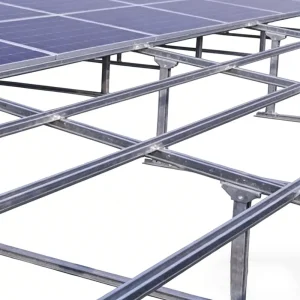
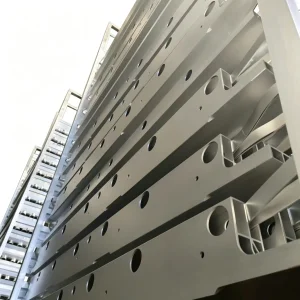
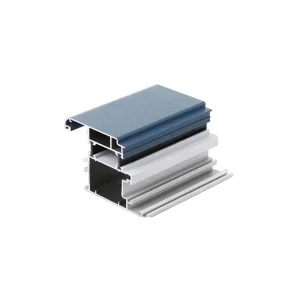
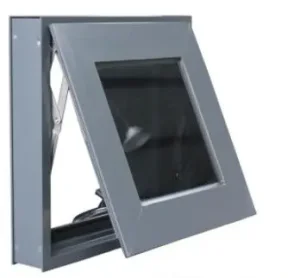
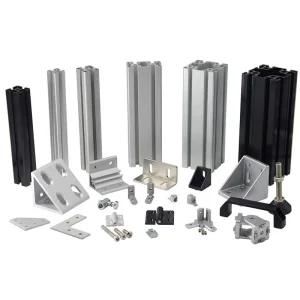
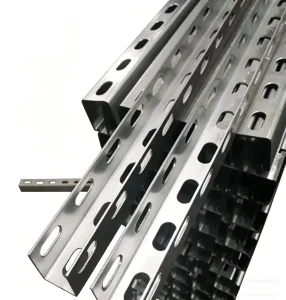
The global industrial manufacturing landscape is undergoing a massive transformation driven by the twin imperatives of weight reduction and structural efficiency. Crucial to this transformation is the integration of custom-extruded aluminum profiles. Originally reserved for standard architectural framing, custom aluminum extrusions are now replacing traditional steel and cast components in key applications, including high-speed rail networks, electric vehicle (EV) chassis systems, industrial automation, and deep-sea marine engineering.
Aluminum's inherent characteristics—a high strength-to-weight ratio, excellent thermal and electrical conductivity, natural corrosion resistance, and complete recyclability—make it the material of choice for sustainable global infrastructure. Custom profiles allow engineers to place material structural support exactly where dynamic stress demands it. This eliminates unnecessary weight and significantly reduces secondary machining times. This level of optimization requires a deep understanding of metallurgy, precision tooling geometry, and advanced post-extrusion CNC machining.
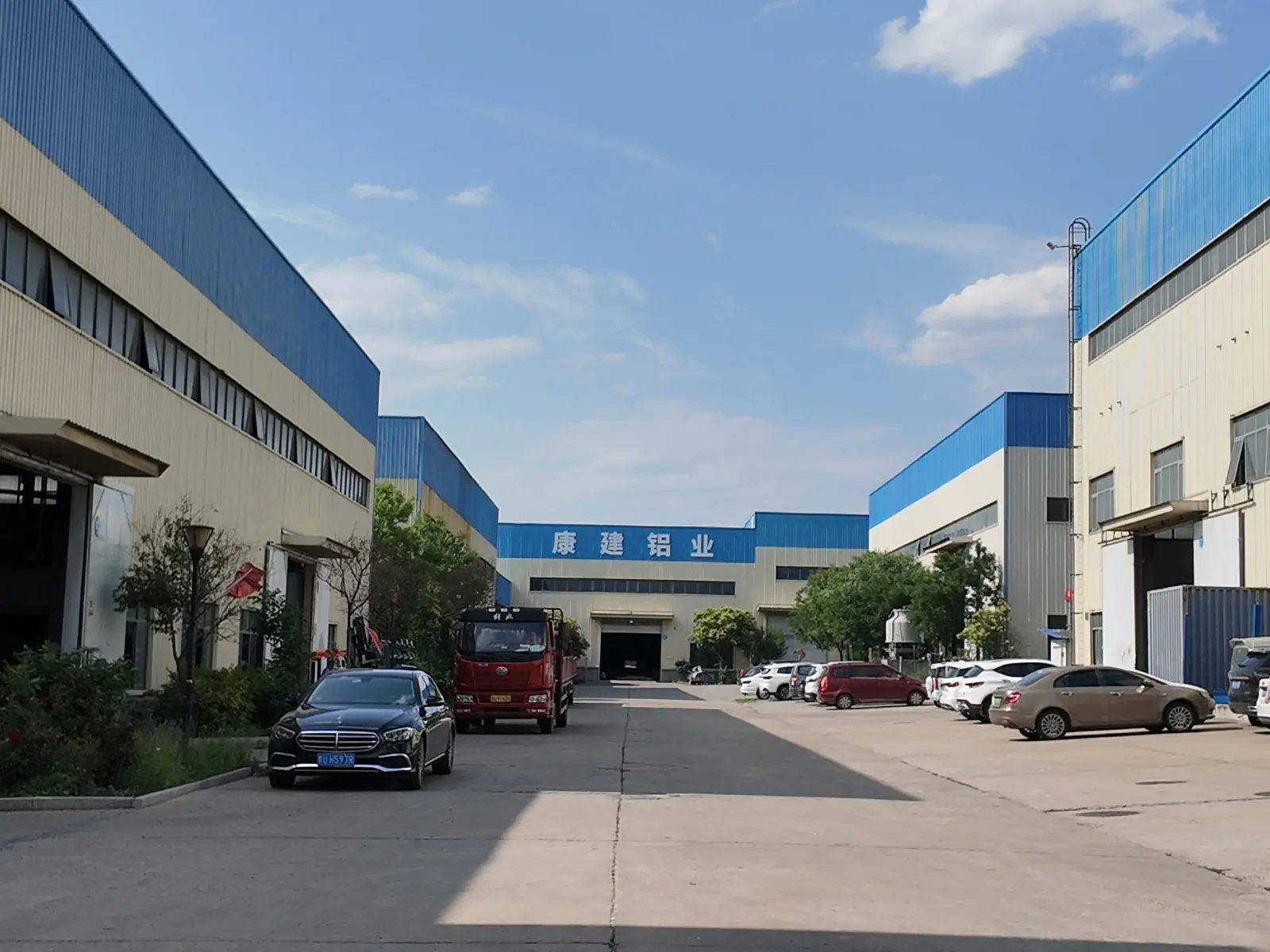
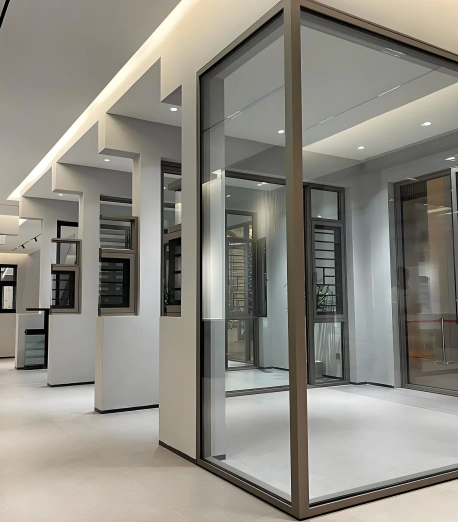
Established in 2022, Qingdao Kangjian Aluminum Industry Technology Co., Ltd. is a leading manufacturer of high-end aluminum extrusions in the Qingdao region. We specialize in custom-designed profiles for critical applications, including railway structures, advanced automotive frames, marine vessels, and energy-efficient building systems.
Operating a state-of-the-art 133,333 square meter (200 mu) production base in the Jimo District of Qingdao, our facilities feature over 80,000 square meters of specialized manufacturing workshops. Equipped with five advanced extrusion production lines, we have a current annual capacity of 15,000 tons of high-precision aluminum profiles. Our extrusion systems range from high-capacity presses for heavy industrial profiles to smaller lines for intricate, high-tolerance designs.
Our production floor features a range of press capacities, including 2500T, 1450T, 1150T, and dual 700T extruders. This equipment allows us to extrude profiles with circumscribed circle diameters up to 350mm and wall thicknesses down to 0.8mm, ensuring high dimensional accuracy.
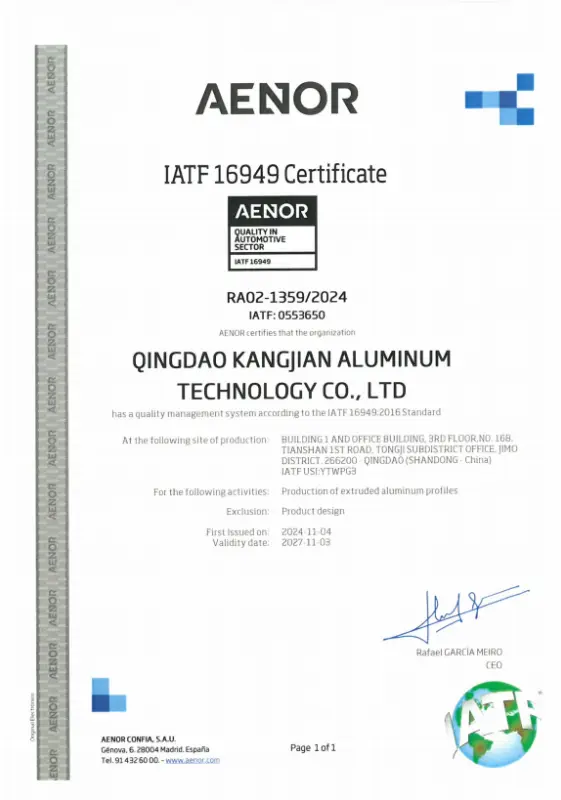
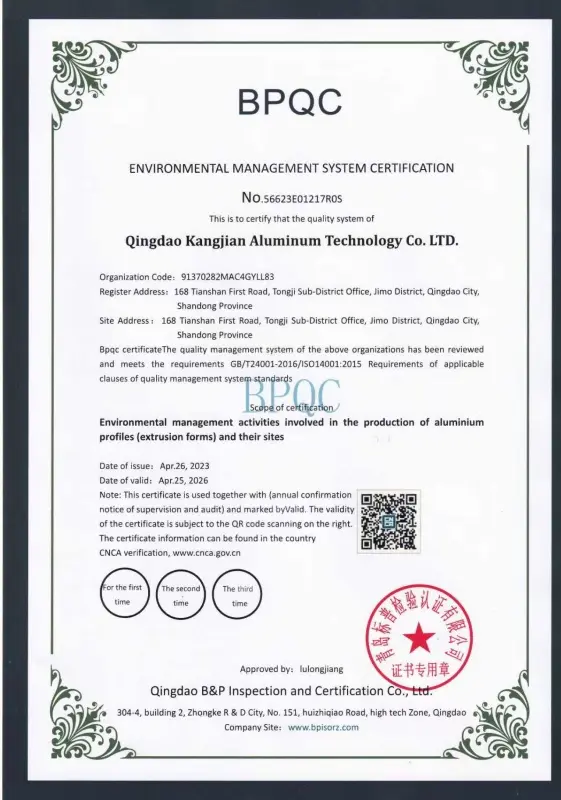
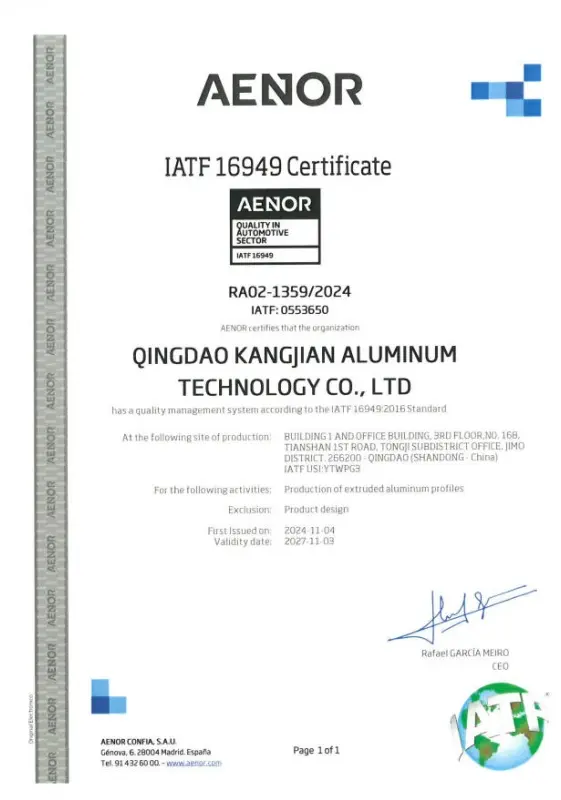
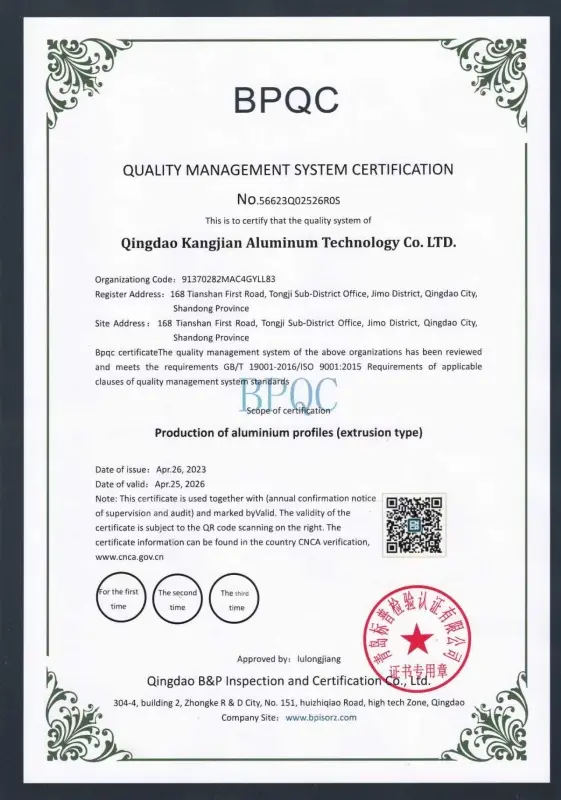
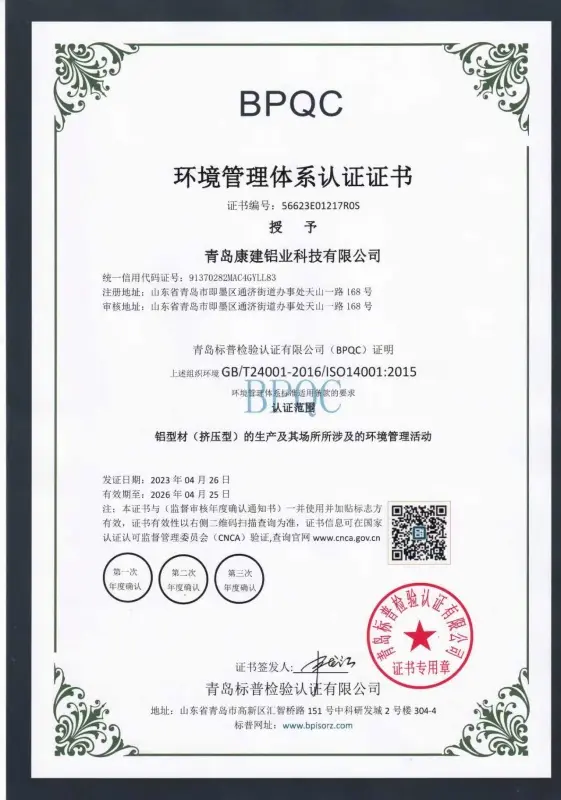
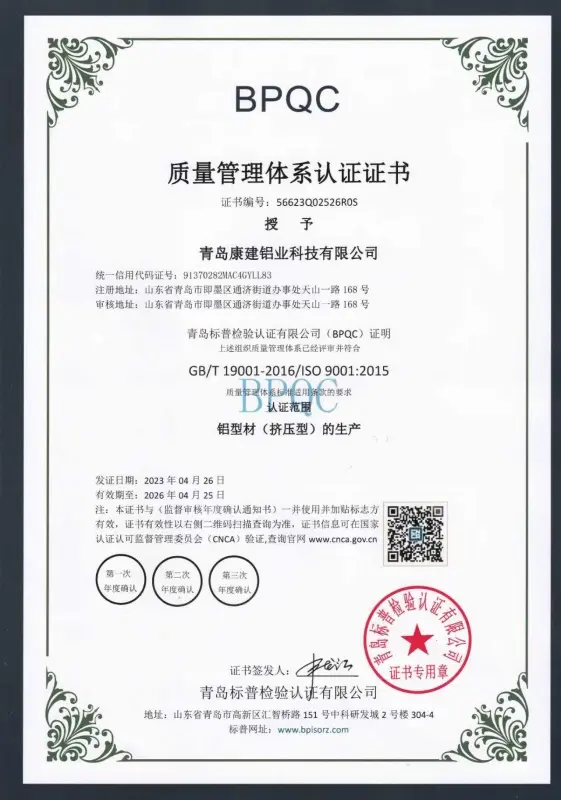
To support high-stakes industries, we have secured key quality management and process certifications, including: IATF 16949 (Automotive Quality Management), ISO 22163 (Railway Industry Quality Management), EN 15085-2 Class CL1 (Welding of Railway Vehicles), DIN 6701 Class A1 (Adhesive Bonding in Railway Applications), and ISO 9001 / ISO 14001.
Our facilities are strategically located near the port of Qingdao, enabling direct maritime shipping routes to major industrial markets in South Korea, Japan, North America, and Europe. This geographic advantage supports secure, cost-effective international supply chains.
Choosing the correct aluminum alloy and temper is critical to ensuring product performance, durability, and cost-efficiency. Our metallurgy division processes various alloy groups, primarily focusing on the 6000 and 7000 series, which are optimized for mechanical strength, weldability, and surface finishing.
| Alloy Grade | Common Tempers | Tensile Strength (MPa) | Yield Strength (MPa) | Primary Industrial Applications |
|---|---|---|---|---|
| 6063 | T5, T6 | 150 - 220 | 110 - 170 | Architectural framing, heat sinks, LED housings, solar frames, window profiles. |
| 6061 | T6, T6511 | 260 - 310 | 240 - 275 | Robotic arms, drone frames, automotive chassis brackets, marine gangways. |
| 6082 | T6 | 290 - 330 | 250 - 280 | Heavy-duty structural components, high-speed rail structures, crane gantries. |
| 7003 | T5, T6 | 320 - 380 | 290 - 345 | Railway door columns, crash buffers, structural automotive reinforcements. |
| 7075 | T6 | 500 - 570 | 430 - 500 | Aerospace structural parts, military fixtures, high-stress drone arm components. |
During the extrusion process, aluminum alloy billets are preheated to 450°C - 500°C and forced through a custom tool-steel die under high pressure. The cooling rate at the press exit is controlled via air blast or water quench to achieve the target temper properties (T5 or T6). This controls grain structure and minimizes internal stress, helping prevent distortion during subsequent CNC machining steps.
Every batch of extruded profile undergoes standard quality inspections. Our laboratories are equipped with spectrometers for chemical composition analysis, universal tensile testers for mechanical performance testing, and coordinate measuring machines (CMM) to verify profile tolerances. This process ensures compliance with international quality standards before products are shipped.
For high-end industrial applications, raw extrusions require post-processing to achieve final installation tolerances. At Qingdao Kangjian, our CNC machining department provides secondary processing to deliver ready-to-assemble structural parts directly to customer assembly lines.
Our facility operates heavy-duty 5-axis CNC machining centers designed to handle long profile lengths up to 6.5 meters. This setup enables single-setup multi-angle milling, tapping, and counter-boring, which eliminates positioning errors and maintains precise geometric alignment across long extrusions.
Certified to EN 15085-2 CL1, our structural welders and automated robotic cells handle complex aluminum alloy weldments. Working under strict metallurgical controls, we perform MIG and TIG welding for railway structural panels, automotive chassis subframes, and heavy industrial armatures.
We provide a range of surface treatments in-house. These include micro-abrasive sandblasting, chemical etching, clear or color anodizing, organic powder coating, and PVDF liquid painting. These coatings help protect structural components from environmental exposure, particularly in marine or industrial environments.
Our custom profiles are engineered to integrate seamlessly into complex industrial equipment, providing structural support in challenging operational environments.
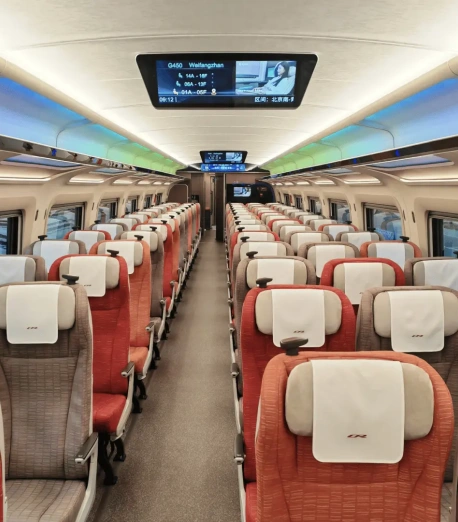
High-speed passenger trains require lightweight, high-strength structural profiles to minimize kinetic energy consumption while ensuring passenger safety. Qingdao Kangjian supplies complex structural extrusions for train body sides, floor decks, and interior support structures. Our EN 15085-certified welding and DIN 6701-certified bonding lines ensure weldments withstand continuous vibration stresses.
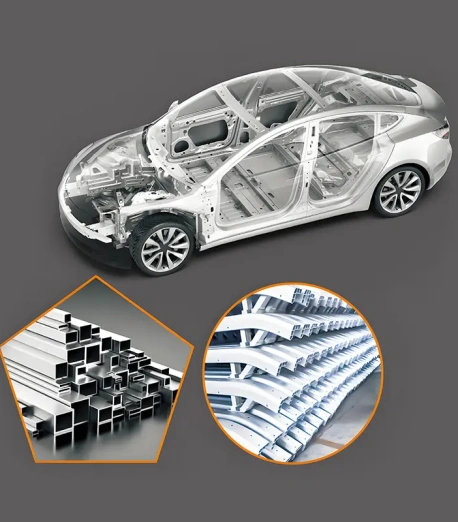
To extend electric vehicle driving range, manufacturers use aluminum components to reduce curb weight. We supply specialized alloys (6082-T6 and 7003) for crash boxes, bumper beams, and structural parts for EV battery enclosures. These profiles are designed to absorb energy during crash events, protecting critical internal battery cells.
Solar arrays deployed in harsh environments must endure high wind speeds and corrosive atmospheres. We produce thin-walled, high-yield-strength 6065 and 6063-T6 frames and brackets. Anodized up to 25 microns, these mounts resist degradation in marine-coastal environments and industrial air zones.
For high-speed robotic manipulators, structural components must be lightweight to reduce inertia while remaining rigid to prevent positioning error. We manufacture precision CNC-machined profiles for articulated robot arms, gantry linear stages, and pick-and-place automation setups, held to tight tolerances.
In Qingdao, a city bordered by the Yellow Sea, our journey began in 2022. Founded to address the regional demand for high-end domestic aluminum extrusions, Qingdao Kangjian set out to provide advanced manufacturing capabilities locally.
Positioned near major international shipping lanes, our facility was established with a focus on global trade. Today, our high-strength, corrosion-resistant profiles are used in major structural applications worldwide, from gantry crane components in Nordic ports to specialized frames in modern rail vehicles.
Our commitment remains straightforward: to engineer high-precision aluminum components that support the performance and reliability requirements of our global customers.

Get professional answers from our engineering team regarding design options, mechanical specifications, tolerances, and supply chain logistics.
Our standard extrusions conform to the EN 755-9 and GB/T 14846-2014 standards, which specify dimensional limits for general applications. For high-precision requirements, we can hold dimensions to EN 12020-2, which offers tighter control over wall thickness, concentricity, and twist tolerances. If your design requires sub-millimeter precision for critical interfaces, we can meet these targets by incorporating secondary CNC machining steps after extrusion.
With our 2500-ton extrusion press, we can produce profiles with a maximum circumscribed circle diameter (CCD) of up to 350mm for simple shapes. For complex, hollow shapes, the limit is typically 280mm, depending on wall thickness. Our team can review your 2D and 3D CAD drawings to evaluate geometry and check for compatibility with our extrusion press capabilities.
Alloy composition directly impacts surface appearance. Alloy 6063 is a magnesium-silicon blend designed for architectural applications, anodizing to a clean, consistent satin finish. Alloy 6061 contains higher levels of iron, copper, and chromium, which can result in a slightly darker or yellowish tone when anodized. If your application has strict cosmetic requirements alongside structural strength, we can adjust chemical compositions or suggest appropriate pre-treatment options.
Yes. Our engineering division works with customers during the design phase. We use Finite Element Analysis (FEA) to evaluate stress distribution and deformation under load. By optimizing wall thicknesses and adjusting internal webbing placement, we can often reduce total component weight without compromising structural integrity. This process helps lower both raw material and shipping costs.
We maintain full process traceability. Our operations are certified to IATF 16949 for automotive manufacturing and ISO 22163 for rail transit supply chains. We perform regular audits on our chemical baths, heat-treatment ovens, and testing equipment. Each shipment includes a Mill Test Certificate (MTC) documenting chemical analysis and mechanical testing to verify compliance with ASTM, EN, or GB standards.
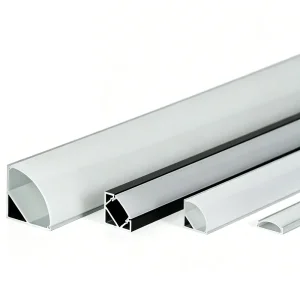
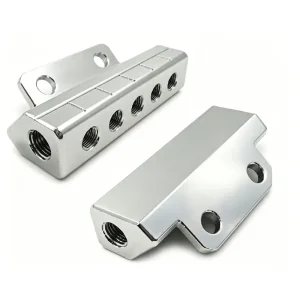
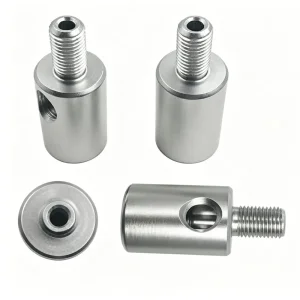
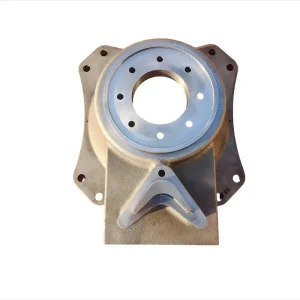
Review our range of secondary-machined components and profiles, tailored for structural assemblies, lighting systems, and industrial equipment.