Kangjian
Kangjian
Kangjian
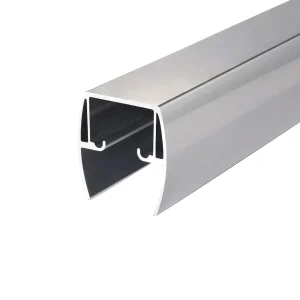
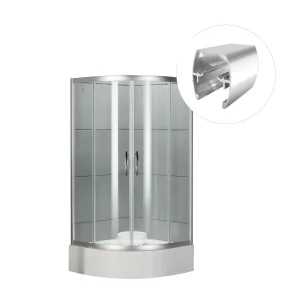
How modern architectural integration demands high-performance, thermally broken aluminum framing solutions for commercial and residential envelopes.
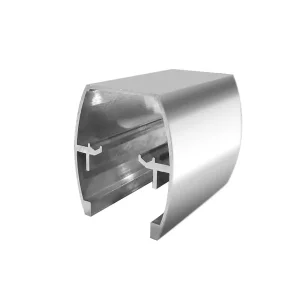
The global construction market is undergoing a structural transition toward open-space architectures and biophilic designs. Sliding doors that fold, commonly referred to as bi-fold doors or accordion glass partitions, have emerged as the premier structural framework for seamless transition zones. Architecturally, these systems call for complex profiles capable of carrying high dead loads while retaining absolute mechanical integrity and resistance to extreme atmospheric pressures.
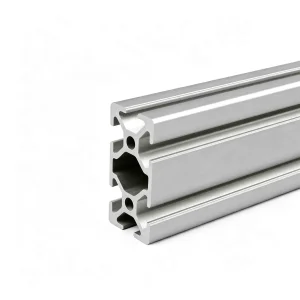
In industrial, commercial, and high-end residential applications, the demand centers heavily on material composition. Standard materials struggle under the mechanical stress of multi-panel operations. This is why leading architectural engineers mandate the use of precision-engineered 6063-T5 aluminum extrusions. These alloys deliver the optimal balance between tensile strength and malleability, allowing manufacturers to engineer ultra-slim sightlines without sacrificing safety or performance metrics.
For B2B procurement officers, sourcing these custom systems requires vetting manufacturers who possess deep knowledge of advanced structural engineering. The integration of high-grade hardware, rolling mechanisms, and heavy-duty structural dampening is critical to ensure that a 500kg multi-panel folding assembly glides effortlessly over its track throughout a 25-year operational lifecycle.
A comprehensive summary of our state-of-the-art aluminum extrusion and fabrication capabilities.
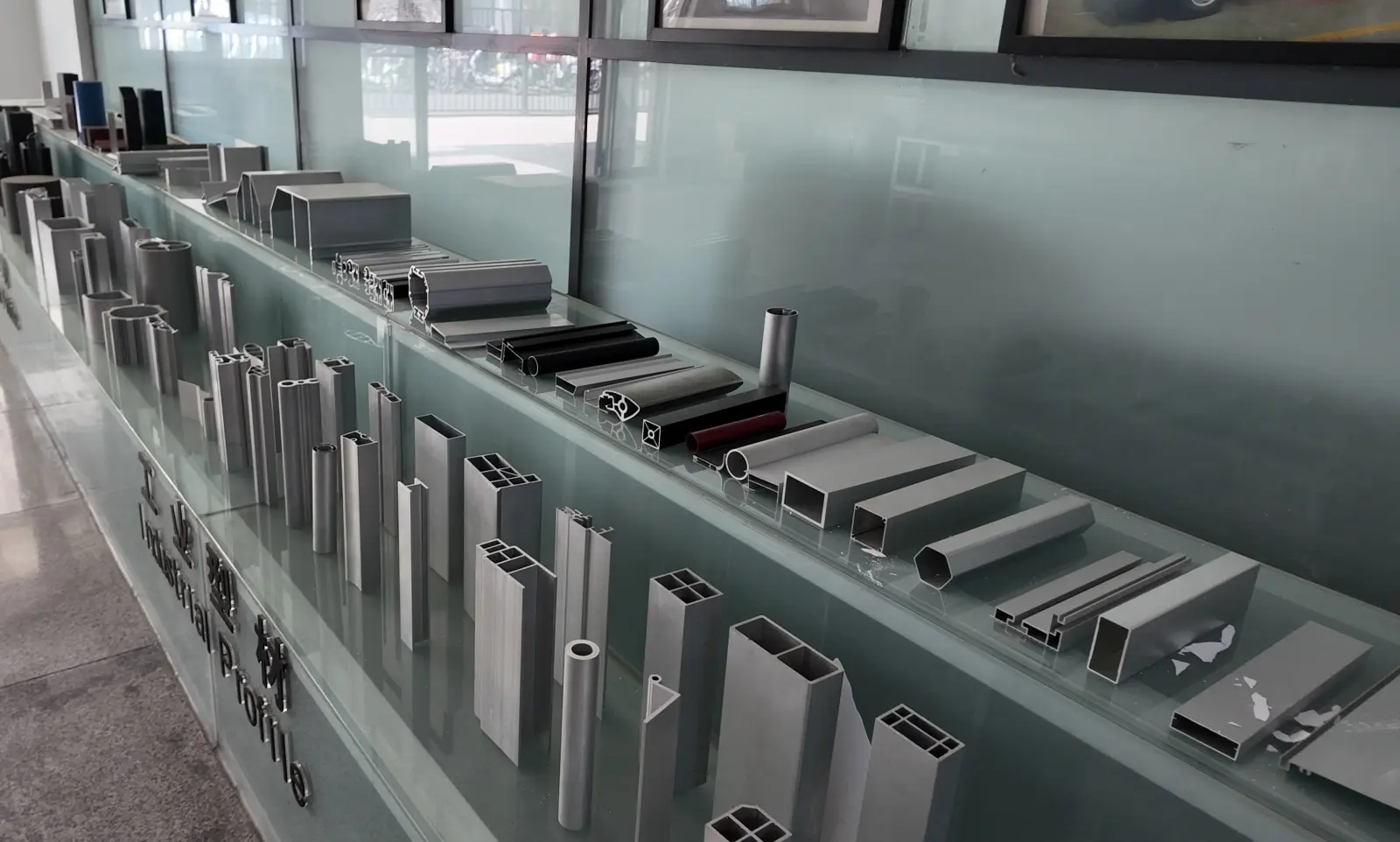
Established in Jimo District, Qingdao City, Kangjian Aluminum operates an 80,000 square meter modern factory housing five automated extrusion lines (including specialized 2500T, 1450T, 1150T, and 700T extruders). We service high-demand industrial sectors globally—ranging from rail transit, aerospace, automotive, and marine systems to high-end energy-saving building partitions and folding door profiles.
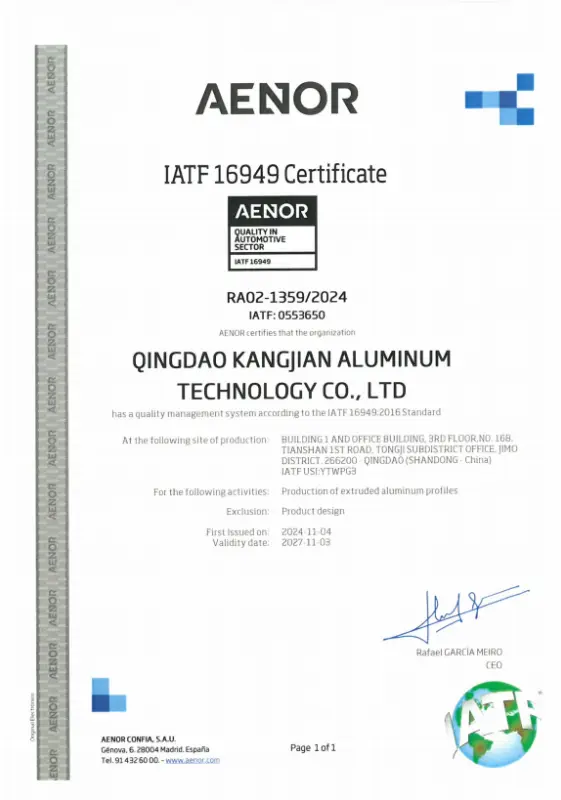
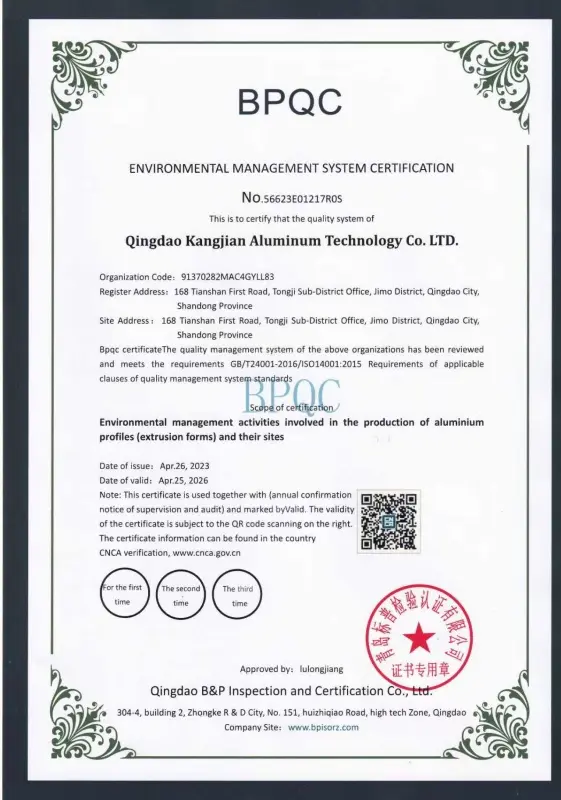
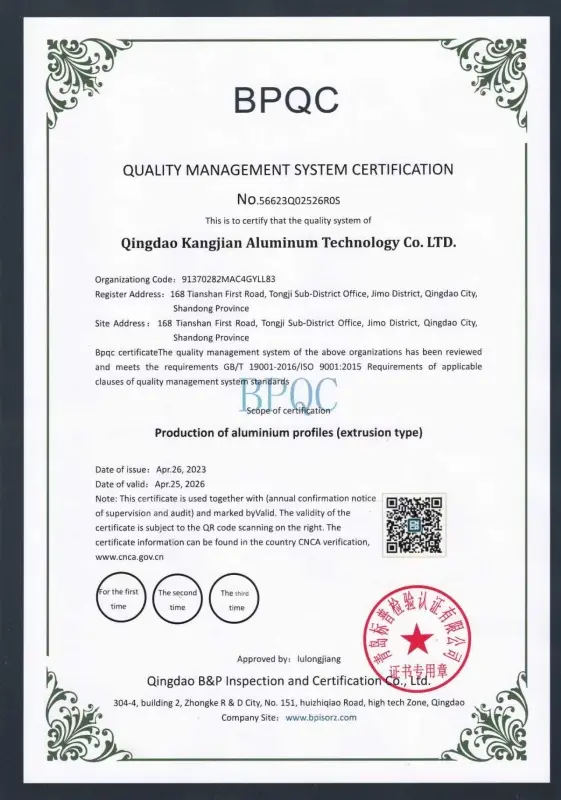
Our design and engineering departments comply with rigorous global quality frameworks. This dedication is backed by a broad portfolio of industrial and welding system certifications including GB/T19001-2016/ISO9001, ISO14001, IATF16949, ISO22163 (Railway Industry), EN15085, ISO3834, AWS, and the strict DIN6701 Bonding Standard.
Our products are manufactured under close quality control pipelines. Kangjian's capabilities translate directly into high-precision structural elements for bi-folding doors, ensuring optimal extrusion density, precise dimensional tolerances, and high surface finish quality (anodizing, powder coating, and PVDF).
Vast raw material access, integrated supply chains, and geographical advantages make Chinese manufacturers the top choice for worldwide logistics.
From raw ingot casting to state-of-the-art multi-axis CNC tooling, surface chemical anodization, and assembly packaging—the entire value chain operates within a concentrated geographical zone. This reduces transit waste, keeps lead times predictable, and stabilizes cost structures.
Operating multiple high-tonnage extrusion presses (up to 2500T) allows us to fulfill custom, complex-geometry structural profiles with fast turnaround. We cut production bottlenecks down to a fraction of standard European or American milling lead times.
Located on the coast of the Yellow Sea, Jimo, Qingdao, offers direct access to the Qingdao Port container terminal. This allows for seamless intermodal ocean shipping to major global hubs across North America, the EU, South Korea, Japan, and Southeast Asia.
Analyzing how folding sliding door profile designs adapt to specific environments and structural demands.

Aluminum folding door designs are used across diverse commercial and residential layout projects globally:
By managing the extrusion process from alloy blending to custom profile fabrication, Kangjian provides direct design flexibility. Builders can specify wall thicknesses, thermal break geometries, and custom pocket dimensions for flush, clean installations.
What engineering firms, wholesale distributors, and project managers should look for when selecting long-term manufacturing partners.
As global carbon-reduction regulations tighten, standard aluminum assemblies are being replaced with thermal-barrier extrusions. These modern profiles use polyamides (e.g., PA66 GF25) to isolate temperature transfer between the outer and inner frames, lowering building cooling and heating demands.
Automated, motorized folding doors are increasingly common in smart home and commercial building networks. The aluminum framing must feature specialized wiring channels and robust mounting interfaces to house concealed smart drive units and sensor clusters.
Modern projects require structural certifications for wind loads, air infiltration, and water penetration. Working directly with verified extrusion mills lets design teams tailor internal ribbing structures to meet specific regional building codes without adding excessive weight.
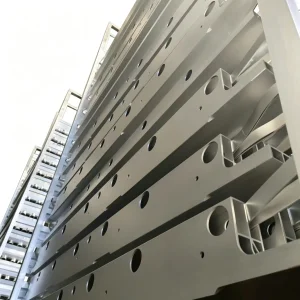
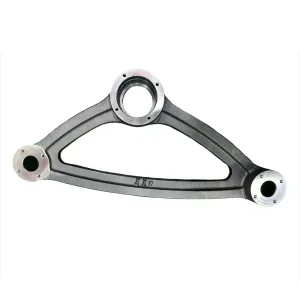
Industrial buyers require manufacturing partners who offer custom engineering alongside raw material delivery. Modern architectural projects rarely use off-the-shelf profile dimensions. Custom CNC machining, surface finishing, and assembly precision are critical:
Direct answers to common engineering, procurement, and logistical queries regarding custom folding sliding systems.