Kangjian
Kangjian
Kangjian
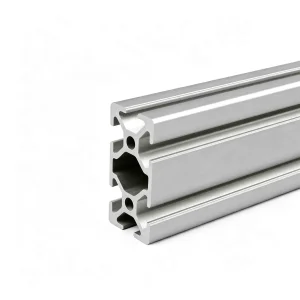
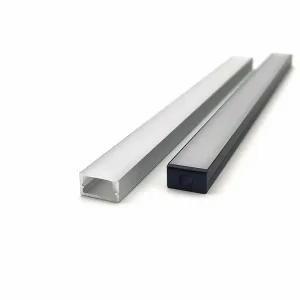
Explore our custom-engineered high-precision extruded profiles for aerospace, automotive, solar bracket framing, and LED linear systems.
The Aluminum 3000 series is classified as a non-heat-treatable alloy group primarily alloyed with Manganese (Mn), typically ranging from 1.0% to 1.5%. This addition increases the strength of the base aluminum by approximately 20% over 1000-series alloys, without sacrificing ductility or corrosion resistance.
For industrial buyers, solar plant engineers, and structural planners, the 3000 series (principally 3003, 3004, and 3105) represents the ultimate workhorse material where moderate mechanical strength, outstanding formability, high corrosion resistance, and superb weldability are required.
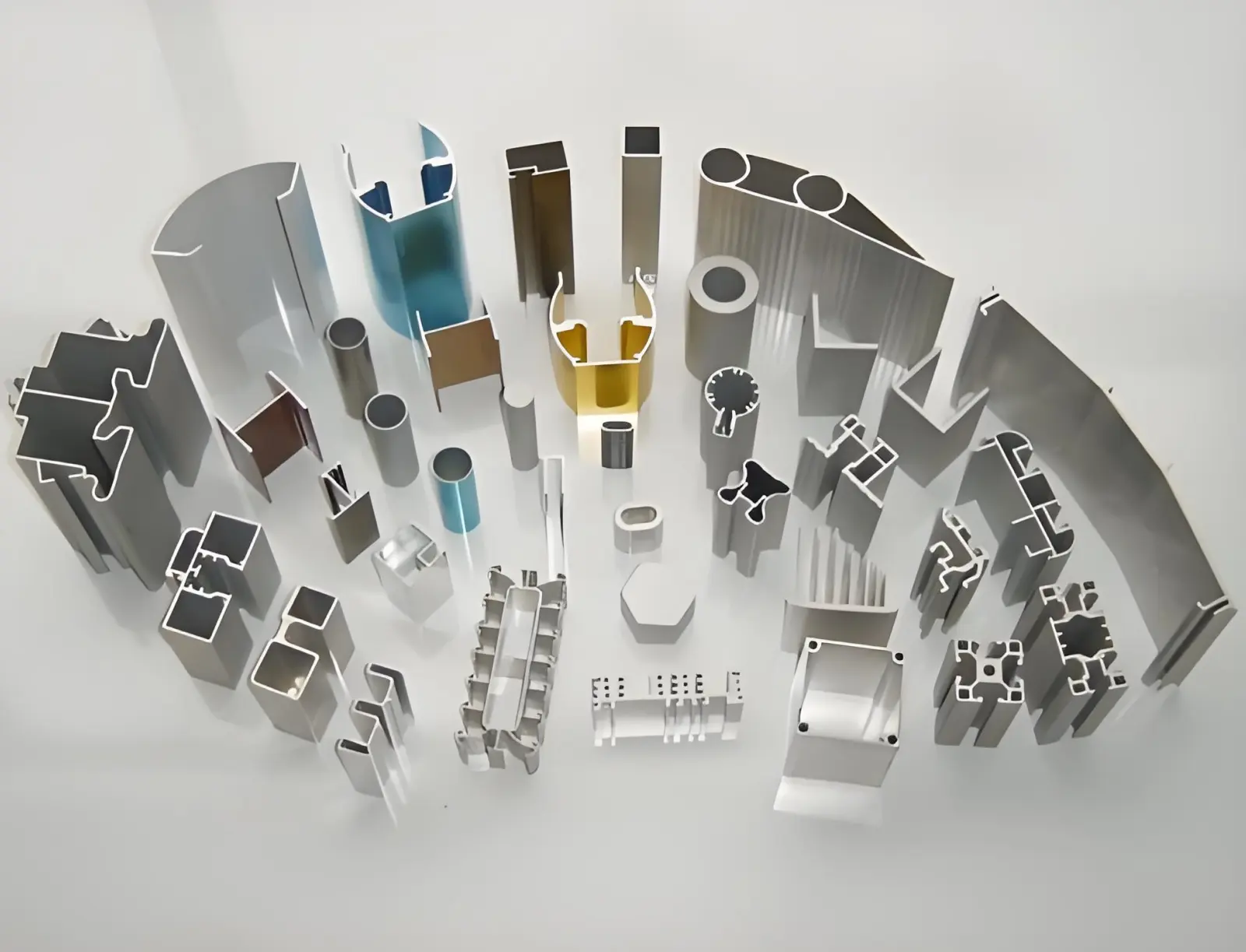
A comparative analysis of metallurgical composition, mechanical strength, and corrosion-prevention capabilities.
Widely recognized for its exceptional chemical resistance. Its formulation prevents localized pitting, making it the premier choice for chemical equipment, heat exchangers, food processing vessels, and complex tubular profiles.
Engineered with traces of magnesium to elevate structural strength without compromising rust prevention. Typically applied to industrial roofing, agricultural storage units, and pressure-resistant fluid lines.
Specially formulated for green building guidelines and sustainable sourcing. High ratio of circular aluminum components with excellent atmospheric rust tolerance for residential cladding and light fixtures.
Why leading global manufacturers source 3000 series aluminum profiles and custom extrusions from China’s premier industrial zones.
China's manufacturing centers house advanced extrusion presses ranging from 700T up to 2500T and higher. This allows factories to compress and push massive billets into ultra-fine profiles with wall-thicknesses under 1.0mm, while maintaining mechanical integrity.
From custom design blueprinting to final CNC hardening, Chinese manufacturers utilize in-house wire-cut EDM machinery. This reduces the tooling production cycle from weeks to mere days, lowering prototyping expenses.
Factories situated in coastal provinces like Shandong (specifically Qingdao) leverage international maritime pathways, offering rapid dispatch and integrated multi-modal transport logistics straight to global seaports.
Qingdao Kangjian Aluminum Industry Technology Co., Ltd. — Delivering global trusted aluminum solutions.
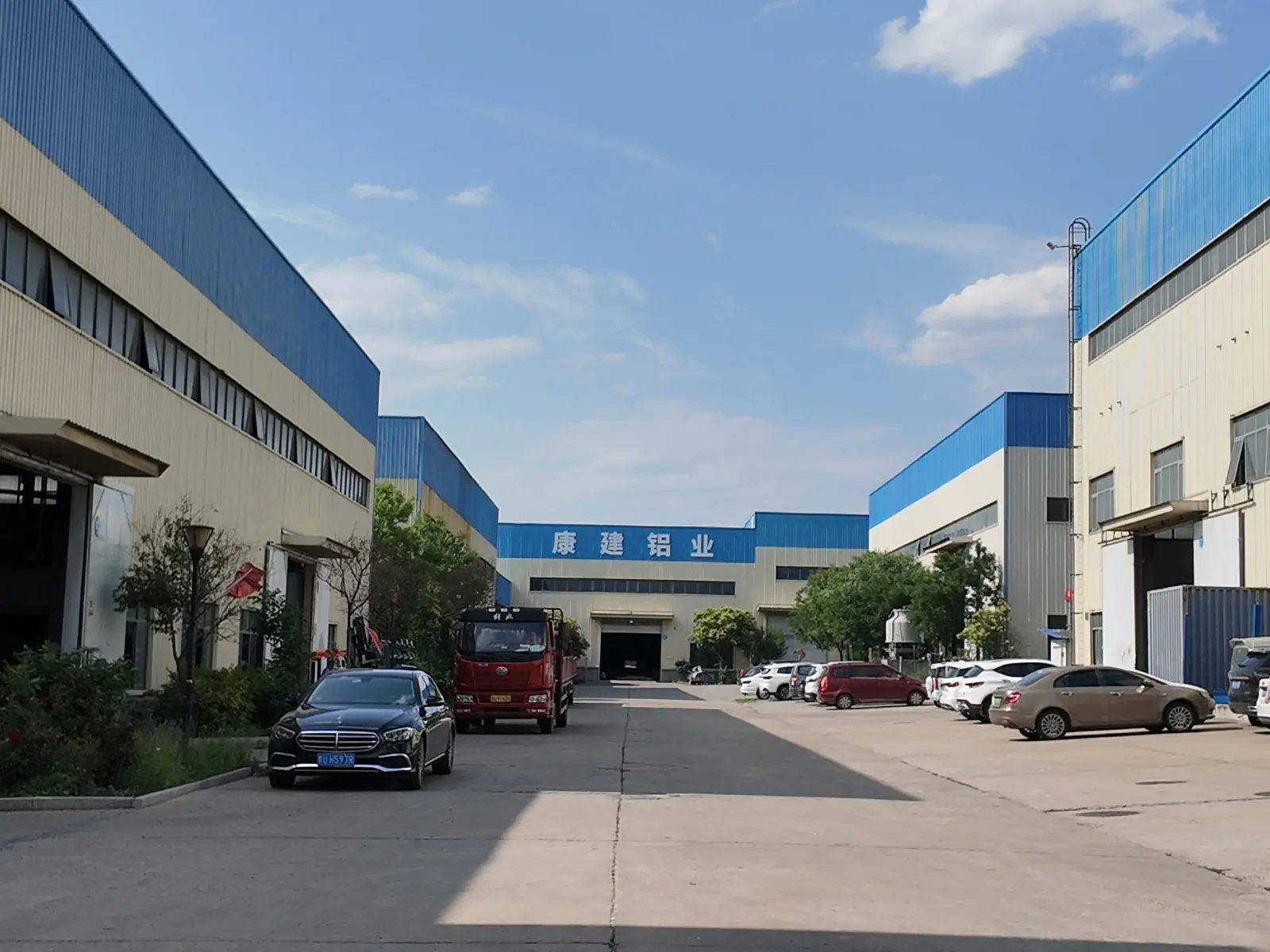
Established in 2022, Qingdao Kangjian Aluminum Industry Technology Co., Ltd. is located in the Jimo District of Qingdao City. Spanning an industrial production footprint of 200 mu, our facilities encompass 80,000 square meters of state-of-the-art factory spaces alongside a dedicated 4,000 square meter administrative building.
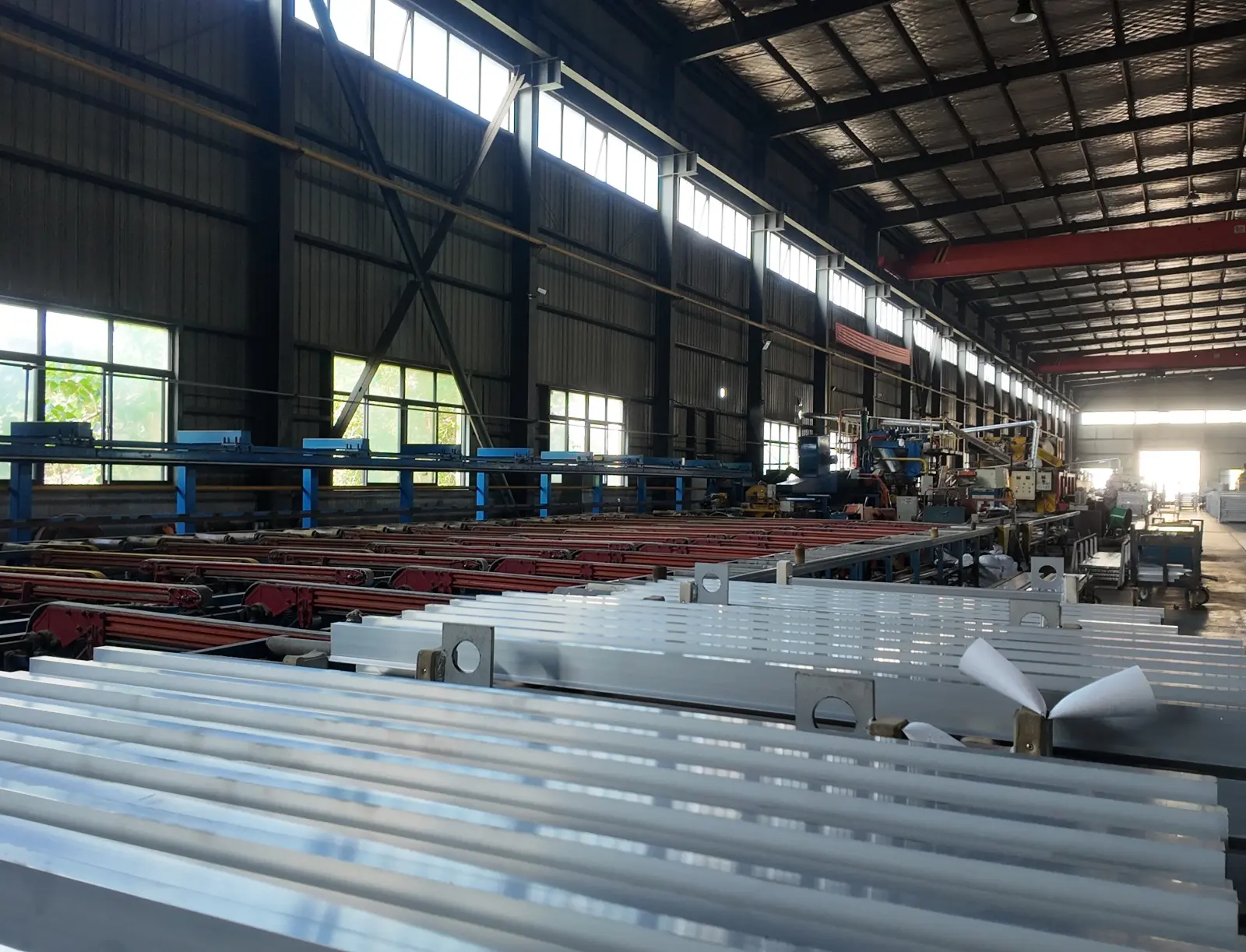
Equipped to drive complex projects, our operational extrusion base yields an annual capacity of 15,000 tons of custom aluminum profiles. The plant employs 90 specialized workers operating 5 precision extrusion lines. Our extrusion matrix includes:
This diverse range of equipment allows us to satisfy requirements for rail transit profiles, automotive frames, heavy logistics containers, energy-saving architectural designs, and customized industrial extrusions.
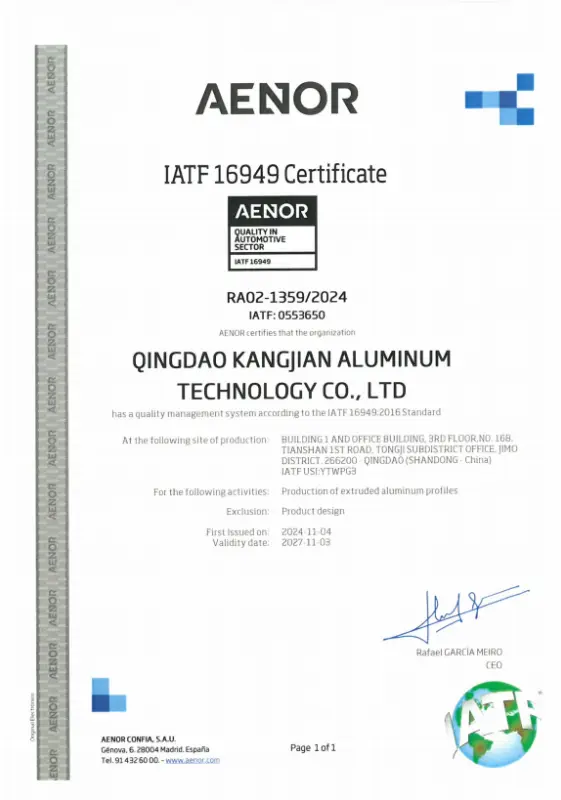
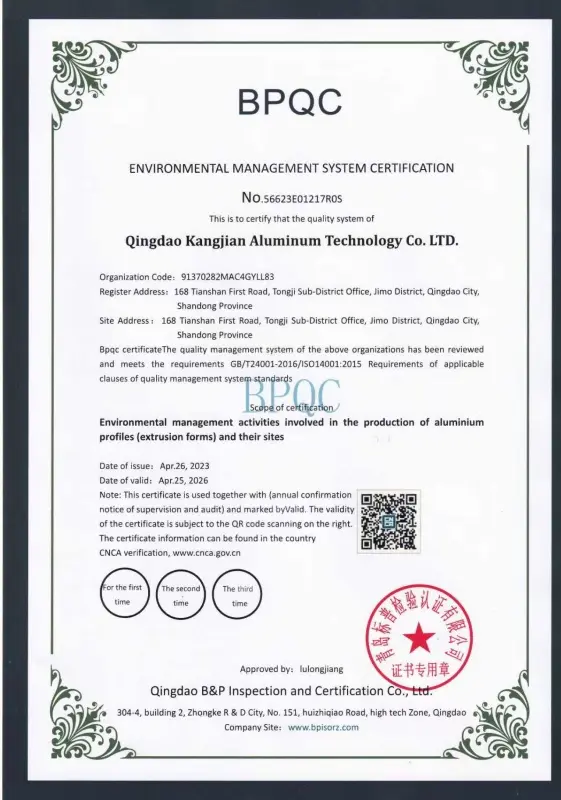
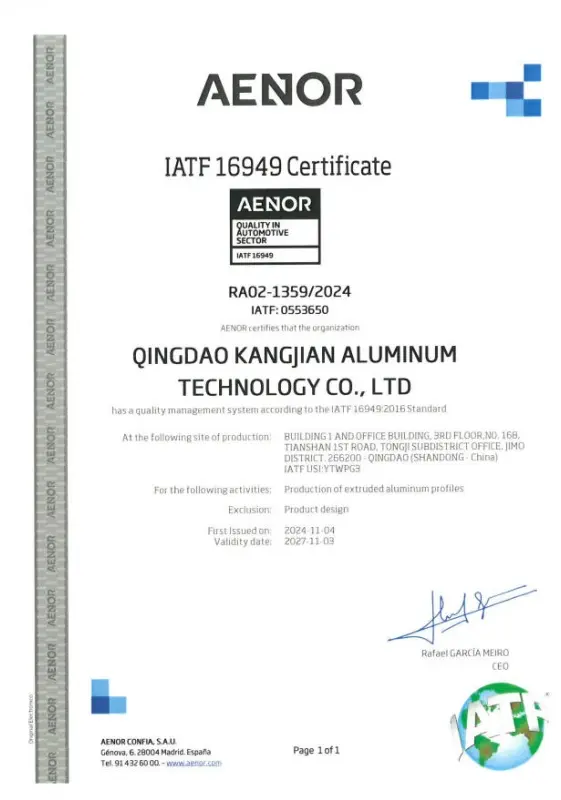
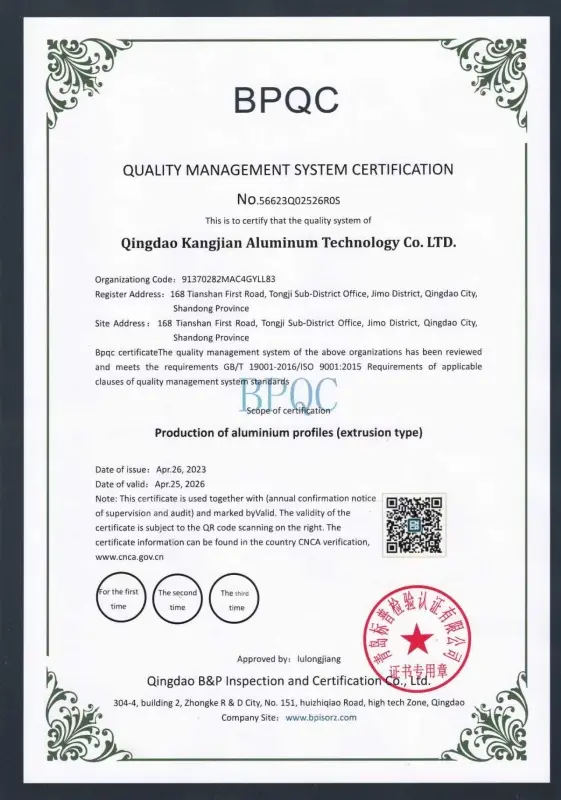
Our engineering quality is backed by globally recognized certifications ensuring product safety, process stability, and environmental compliance.
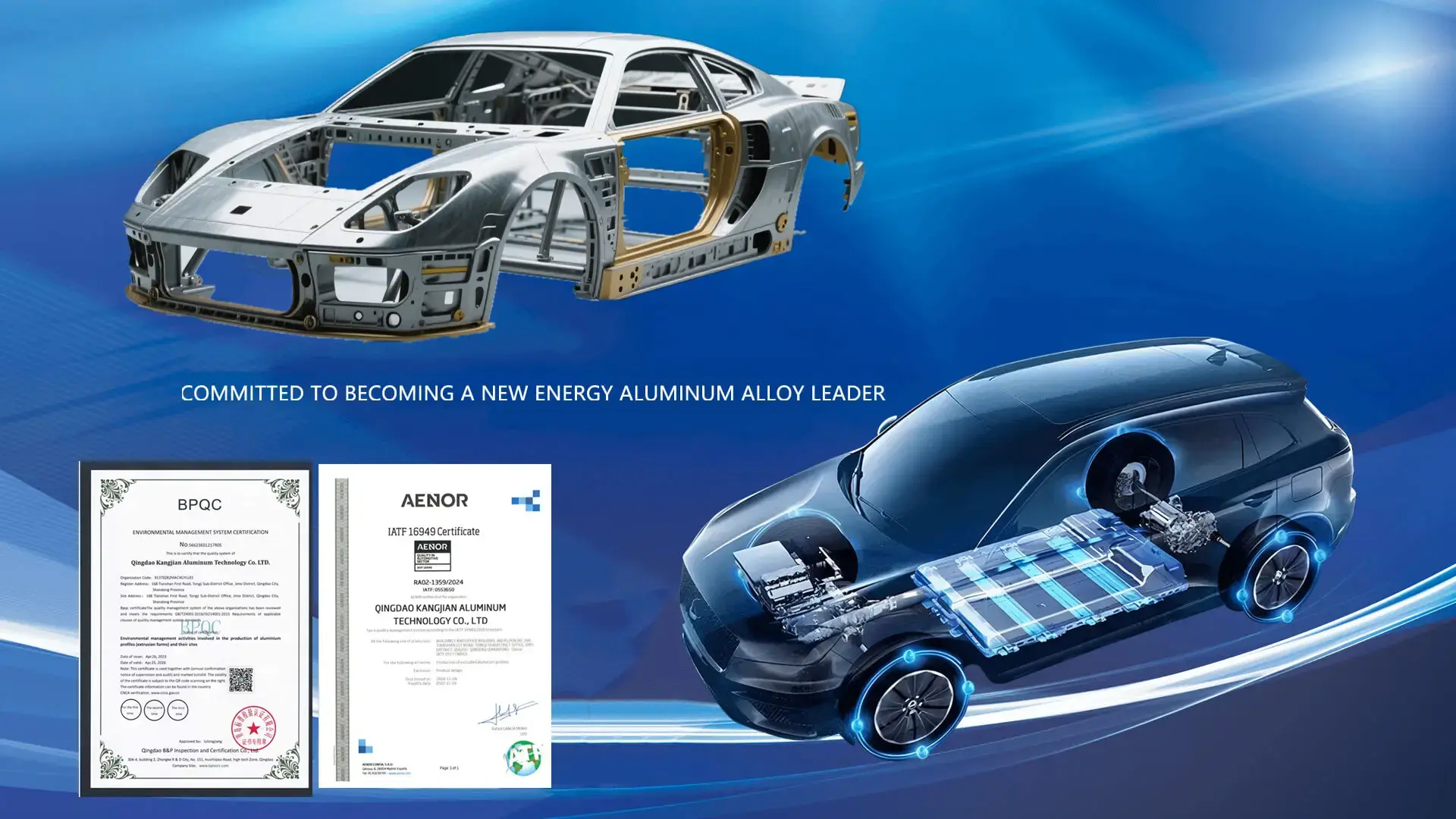
We maintain the prestigious IATF 16949 certification, enabling us to supply OEM structural parts directly to international automotive assembly lines.
Certified to ISO 22163 (Railway Industry Management System), EN 15085, and ISO 3834 welding standards, we provide robust components for rolling stock.
Operating under the guidelines of GB/T 19001-2016 / ISO 9001 and GB/T 24001-2016 / ISO 14001 for reduced environmental impact.
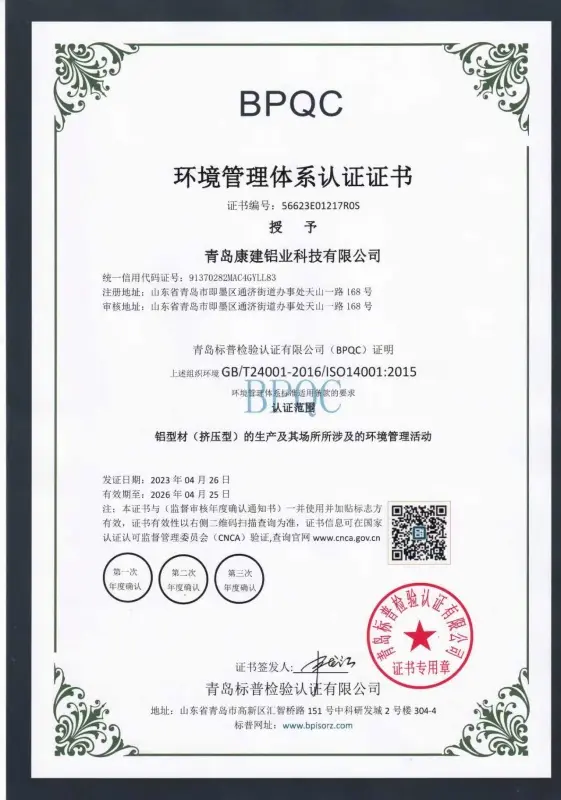
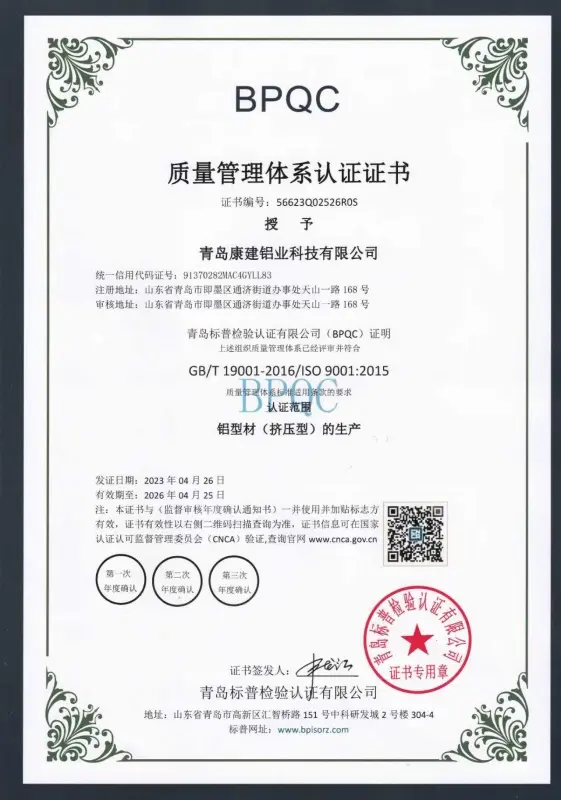
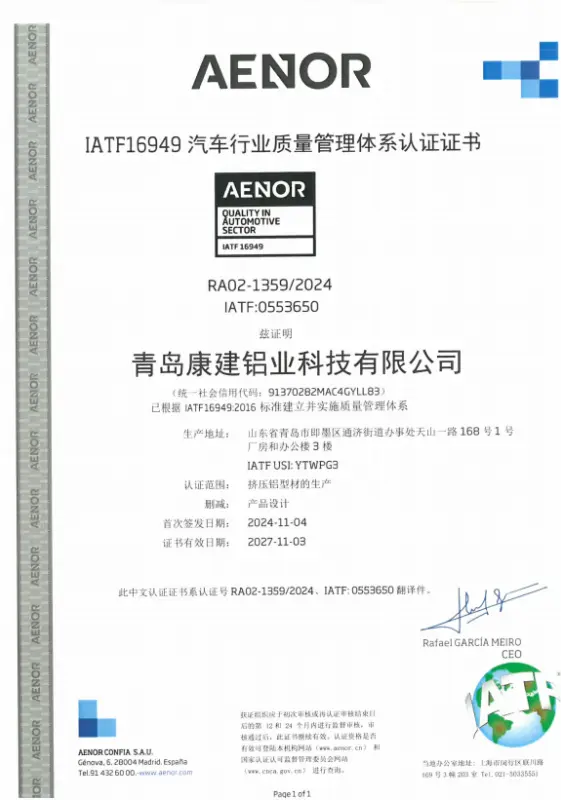
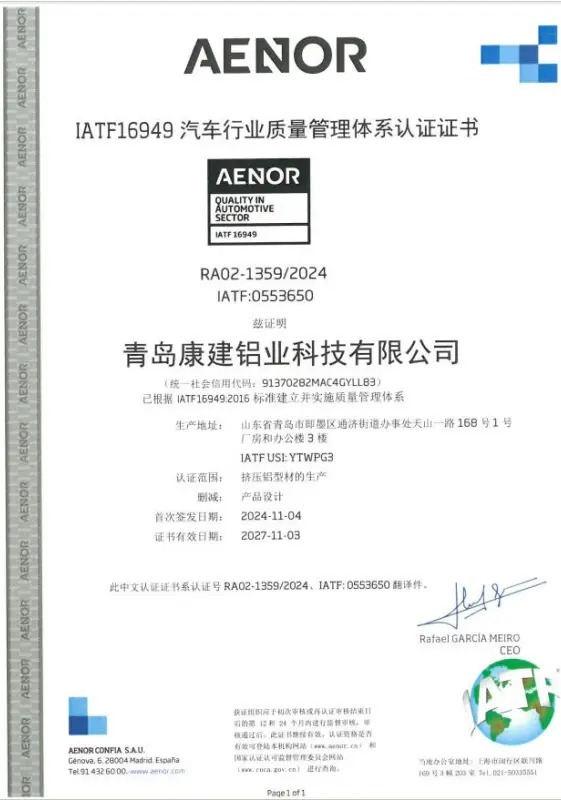
Founded in Jimo, Qingdao, in 2022, the journey of Kangjian Aluminium set out to fill the regional gap in advanced domestic aluminum extrusion capabilities. Positioned alongside key international logistics routes, we designed our infrastructure to leverage both regional supply chains and foreign markets.
"Producing high-end aluminum materials and serving global customers" is our driving motivation. Through continuous research and development, our high-strength, corrosion-resistant profiles are utilized in large-scale logistics operations, marine infrastructure, and solar installations worldwide.

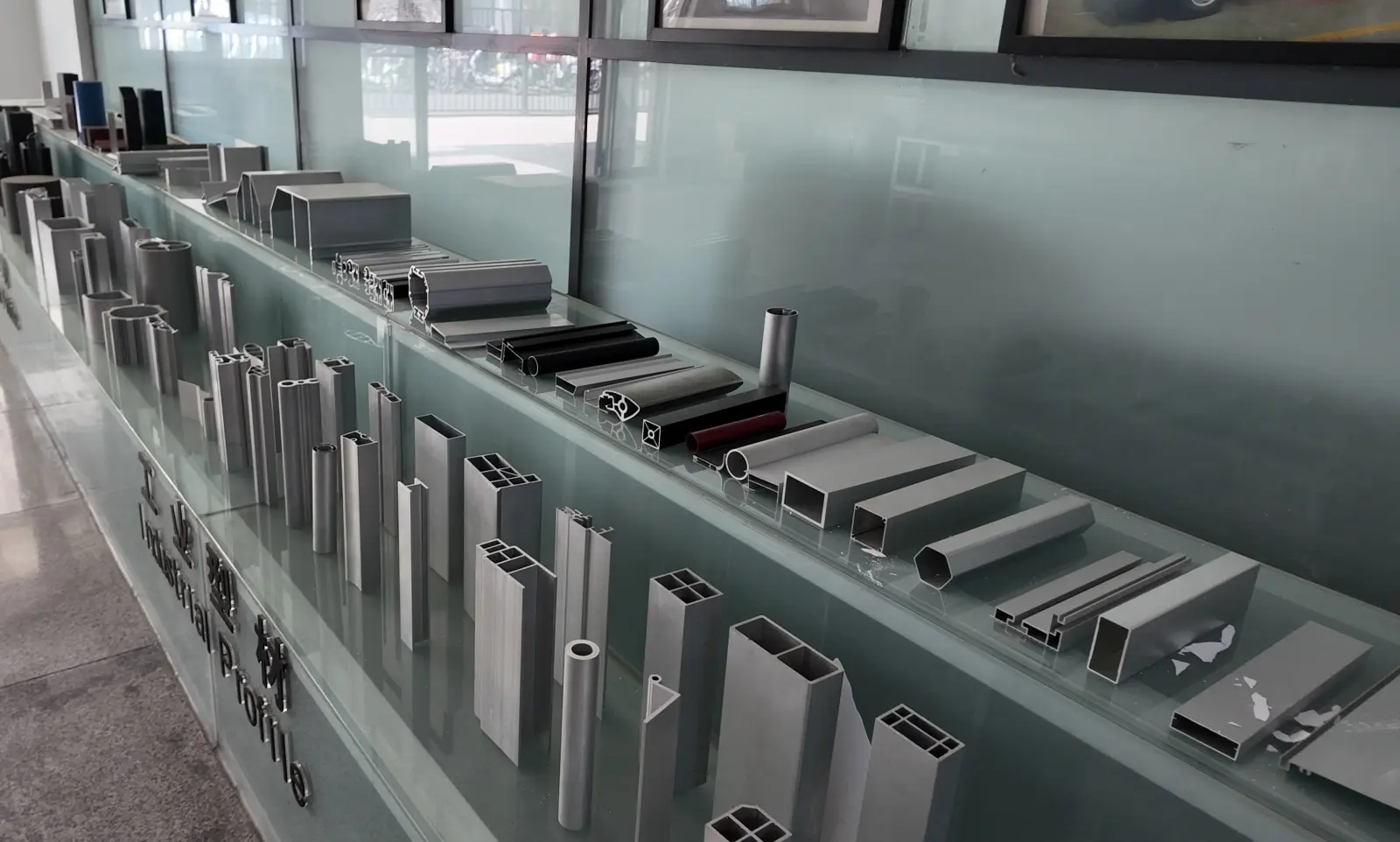
With an eye on emerging opportunities for light-weight structural alloys in clean energy, Kangjian continues to invest in material testing labs and custom tooling techniques. Every run of 3000 series profile profiles undergoes testing for tensile strength, elongation, and salt spray exposure to guarantee field-performance in aggressive industrial conditions.
Driving excellence in the global aluminum extrusion market through three core pillars.
Developing high-precision profile products to help our customers meet demanding design specifications and application goals.
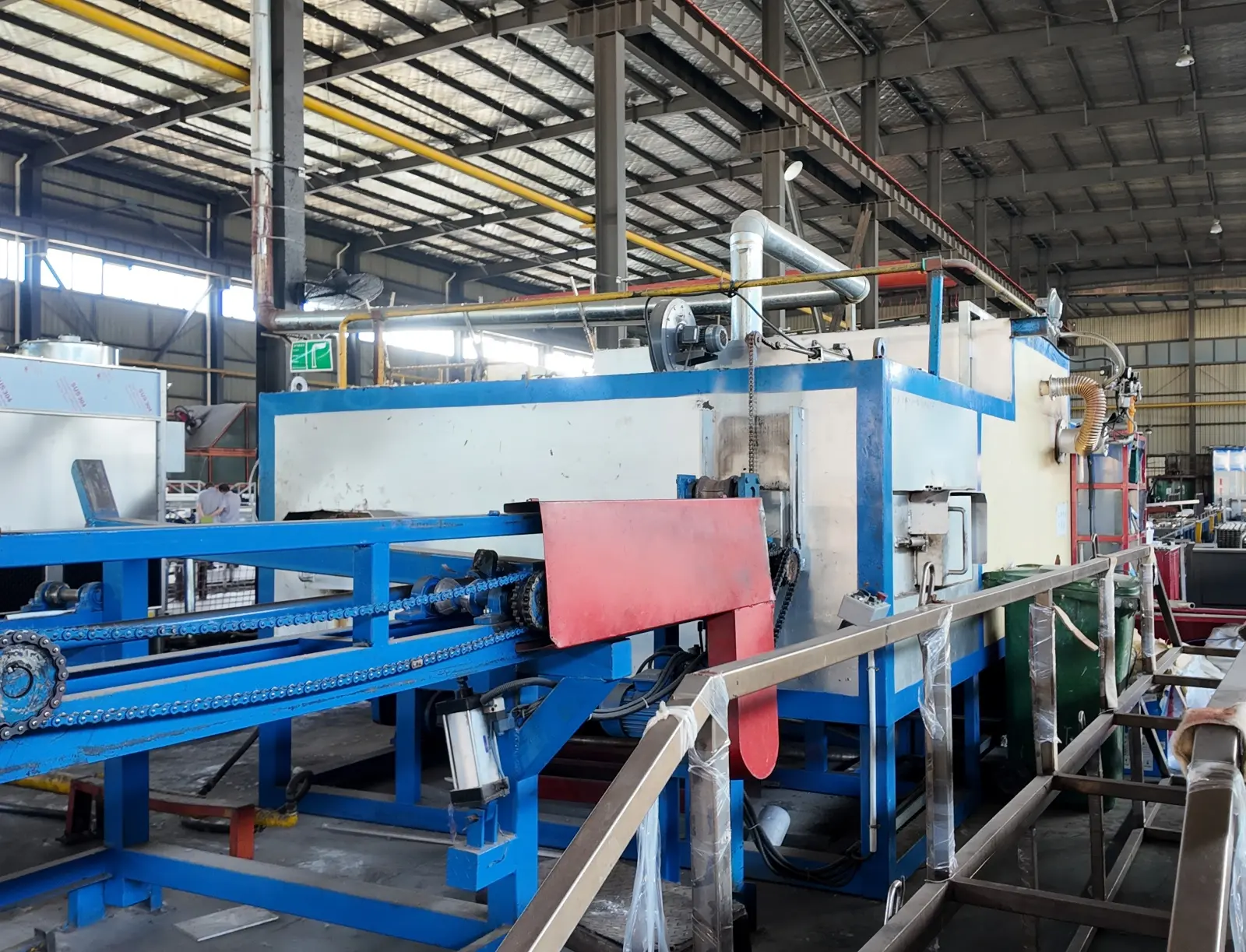
We implement process control across all manufacturing phases to ensure every profile matches target dimensional tolerances.
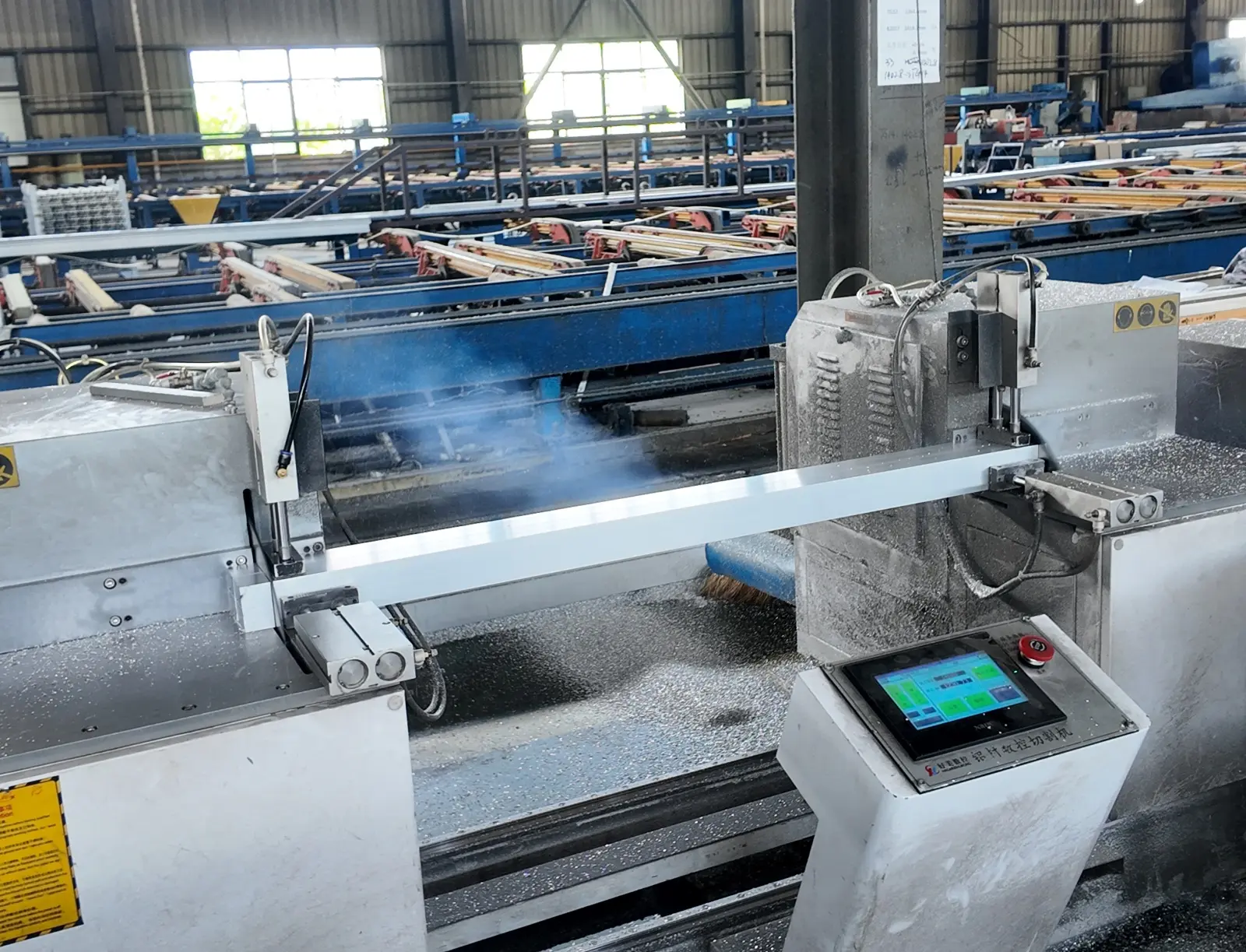
We provide export services, responsive customer support, and optimized logistics to assist our international trade partners.
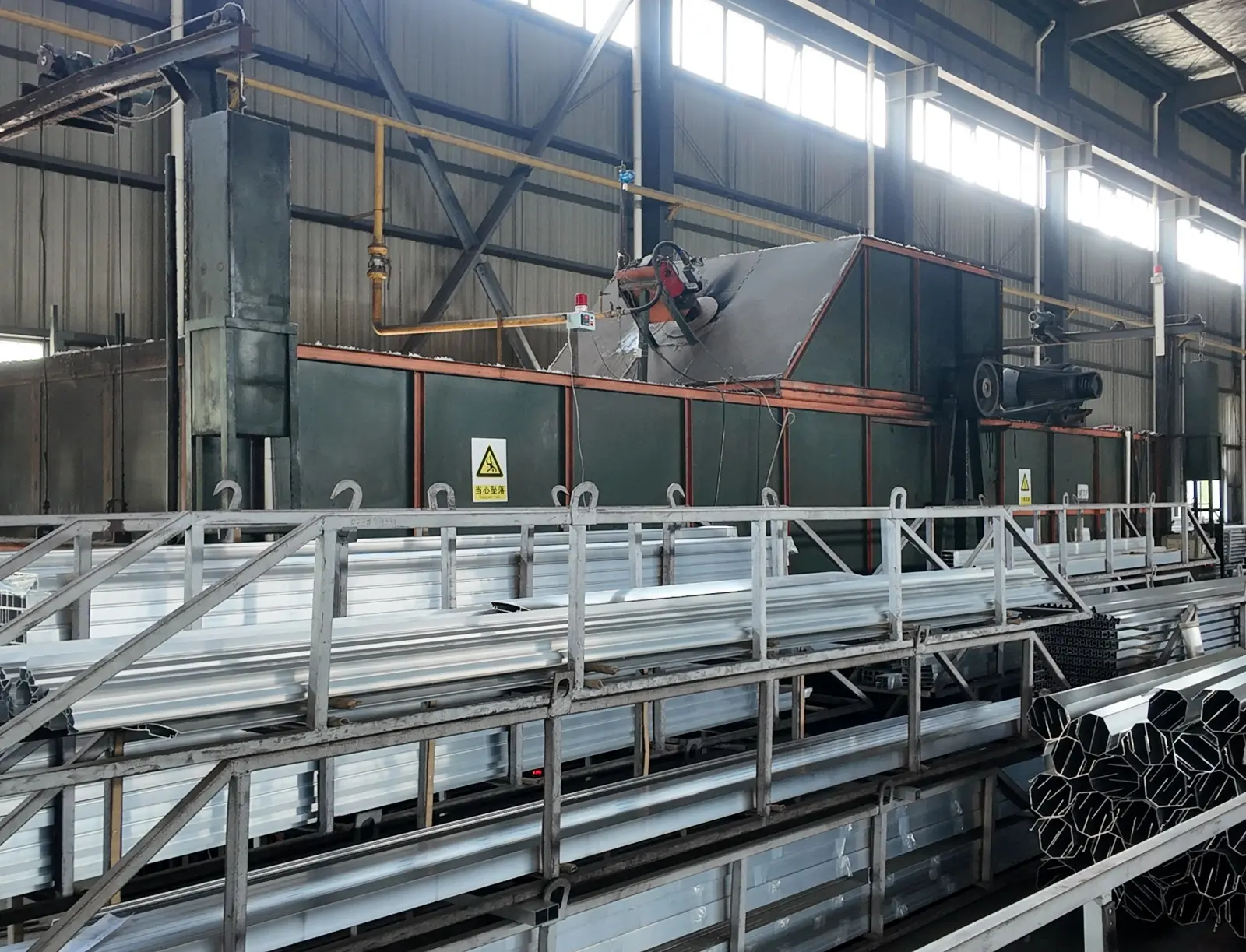
Our engineering portfolio spans diverse structural and component sectors.
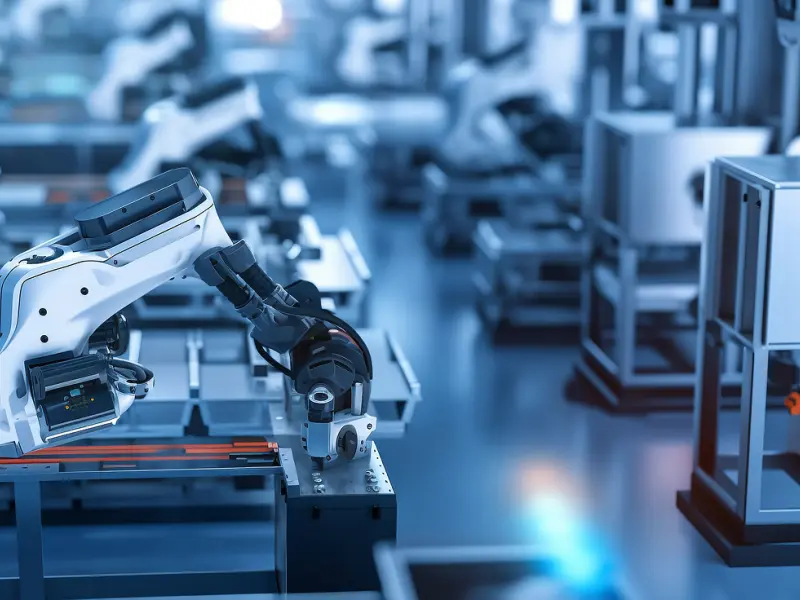
Optimized frames, structural shapes, and custom tooling designed to support manufacturing and factory lines.
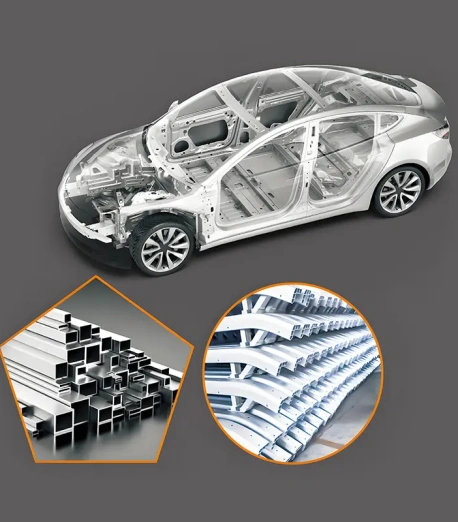
Extruded components for auto parts, structural framing, panels, and heat shields.
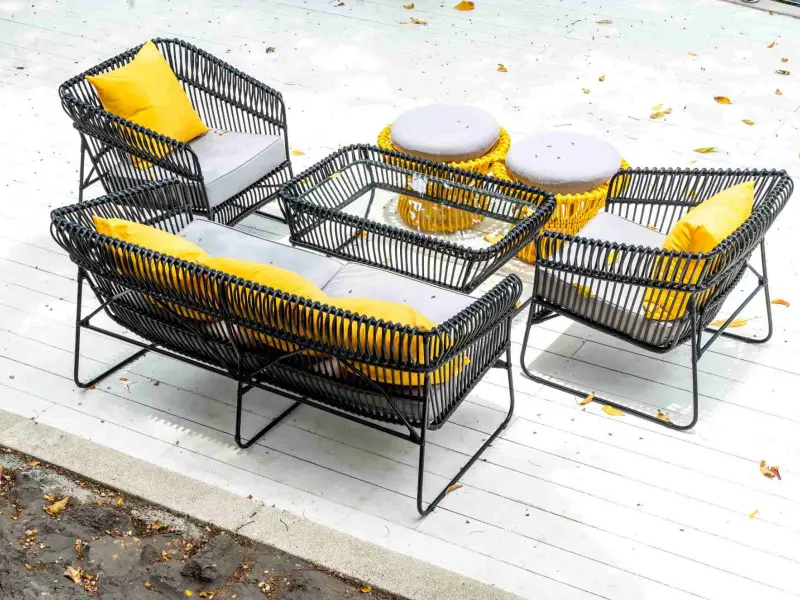
Resistant to atmospheric corrosion, ideal for outdoor frames and decking.
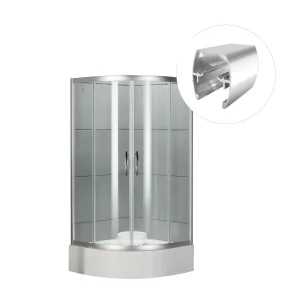
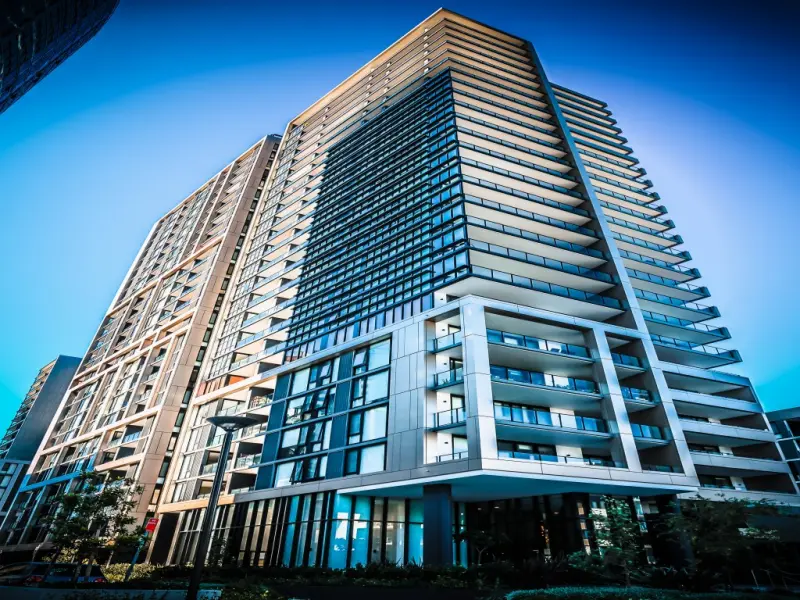
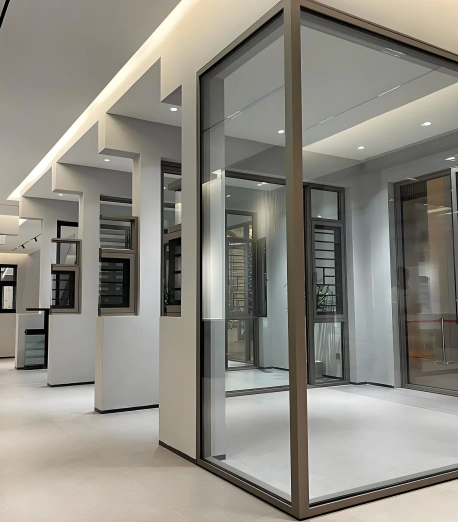
Durable structures for windows, doors, and curtain walls in commercial construction.
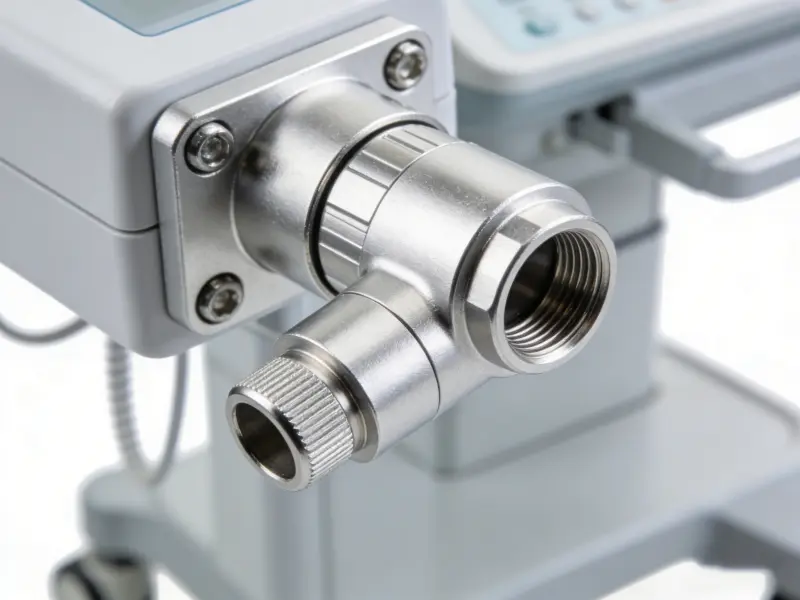
Precision profiles designed to meet hygienic and structural requirements in healthcare equipment.
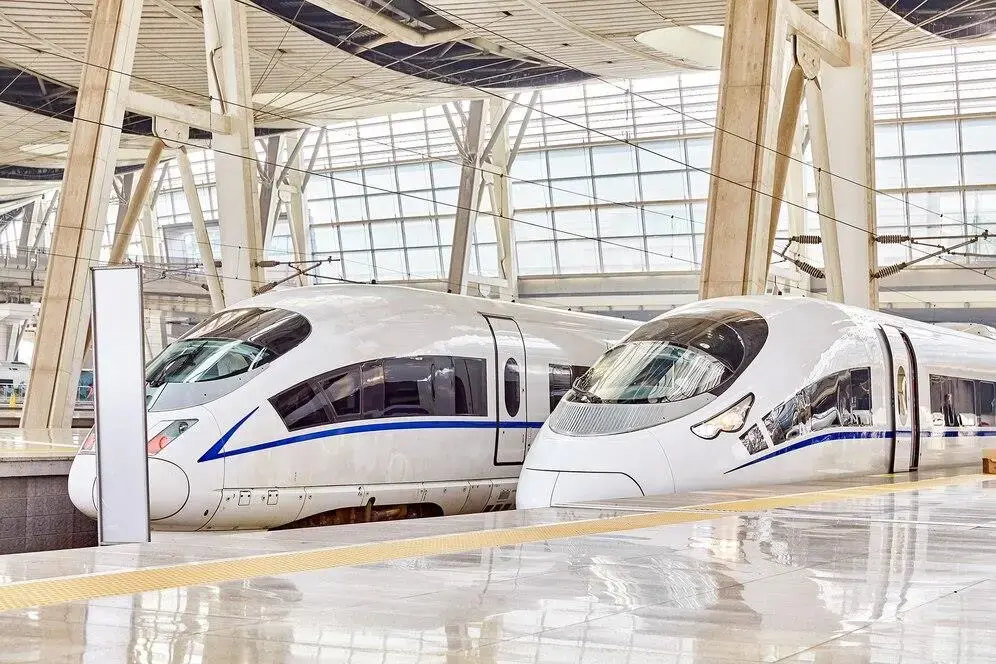
Extruded aluminum frameworks for container structures, trailers, and railway carriages.
Essential quality control checkpoints for international procurement teams sourcing from China.
Ensure suppliers provide material mill test certificates (MTC) indicating chemical limits for Manganese (1.0%-1.5%) and Iron (max 0.7%) to guarantee target corrosion and mechanical properties.
Match cross-sectional complexity to appropriate press sizes (e.g. 700T to 2500T). Larger extrusion presses ensure structural uniformity in heavy profiles, while smaller presses yield precision control for thin-walled tubes.
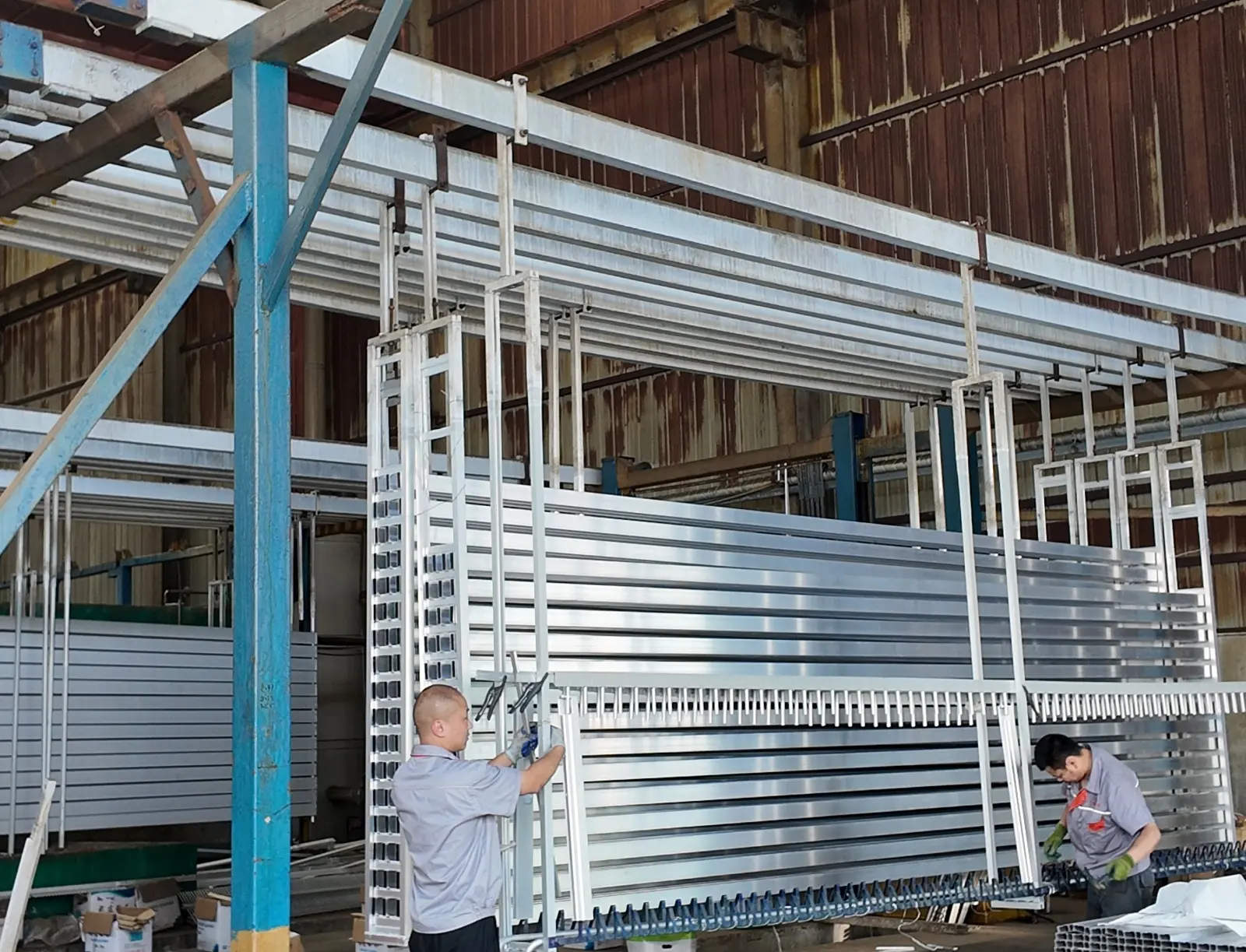
Specify parameters for anodizing, powder coating, or electrophoresis. Exposure-prone profiles require controlled oxide layers (e.g. Class I, min 15 microns) for long-term wear resistance.
Identify partners offering CNC machining, precision cutting, stamping, and welding. Consolidating operations at one facility minimizes logistical costs and quality variability.
Showcasing our materials in maritime shipping, energy infrastructure, and transport operations globally.
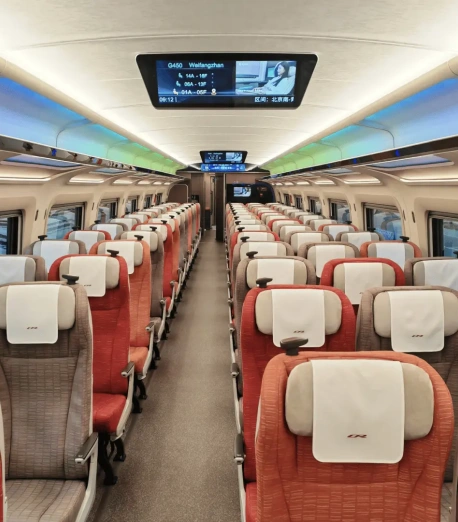
From harbor terminals to railway systems, our materials provide structural stability and durability.
Utilized in coastal port machinery and marine environments where exposure to salt spray requires high corrosion resistance.
Lightweight extruded framing for container vessels, helping reduce operational emissions and fuel consumption.
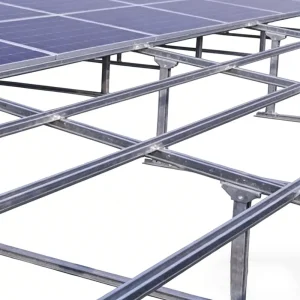
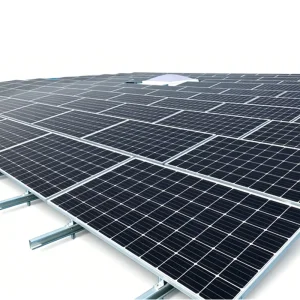
Engineered profiles designed for outdoor durability and load-bearing strength in solar installations.
Manufactured to ISO 22163 railway standards for rolling stock and tracking equipment.
Technical guidance, alloy selection advice, and custom tooling details for global industrial buyers.
The 3000 series uses Manganese as its primary alloying element, yielding excellent corrosion resistance and formability, and is non-heat-treatable. The 6000 series uses Magnesium and Silicon, making it heat-treatable for higher tensile strength and structural hardness. Choose 3000 series for chemical, thermal, and high-corrosion applications, and 6000 series for heavy structural frames requiring high rigidity.
Manganese limits galvanic corrosion by matching the electrical potential of the secondary phase particles with the aluminum matrix. This prevents localized micro-pitting, allowing the alloy to perform well in marine environment and industrial acid applications.
Our facility operates five extrusion lines with press capacities of 2500T, 1450T, 1150T, and dual 700T units. This enables us to extrude profiles across a wide range of cross-sections, ranging from small precision parts to large industrial sections.
We are certified to IATF 16949 (Automotive Quality Management) and ISO 22163 (Railway Industry Management System). Additionally, our welding operations are certified to EN 15085, ISO 3834, and AWS standards.
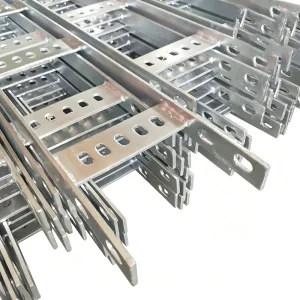
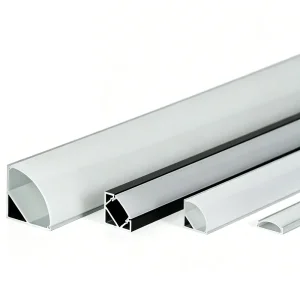
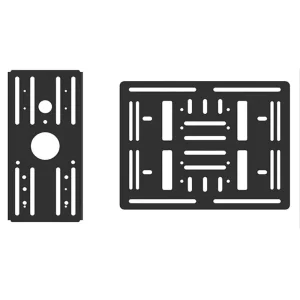
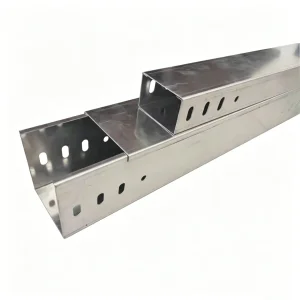
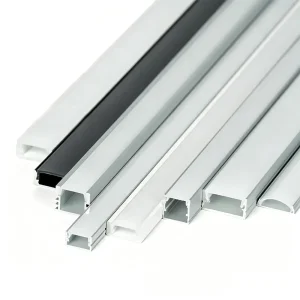
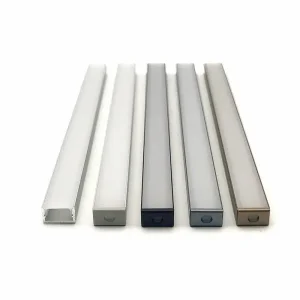
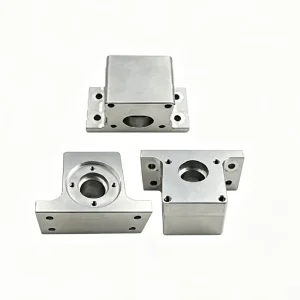
Additional profiles, industrial cable trays, lighting enclosures, and CNC-machined structural parts.