Kangjian
Kangjian
Kangjian
Explore our foundational range of premium profiles engineered for high-performance windows, entry systems, LED lighting channels, and robotics frameworks.
An in-depth analysis of global market trends, metallurgy advances, structural load demands, and global sourcing parameters.
In modern architecture and structural design, the entry system acts as the primary envelope threshold. Selecting a high-performance door frame is no longer just an aesthetic decision but a critical engineering factor. As building envelopes must satisfy increasingly strict thermal, acoustic, and structural limits, the global commercial sector has transitioned toward high-strength, lightweight extruded aluminium door frames. Because of their exceptional strength-to-weight ratio, structural adaptability, and inherent corrosion resistance, aluminium extrusions have become the baseline standard for commercial and industrial designs worldwide.
A major driver behind the growth of the wholesale aluminium door frame market is the integration of advanced metallurgical alloys (such as 6063-T5 and 6061-T6) with thermal break technologies. Polyamide thermal barriers, such as PA66-GF25 (polyamide reinforced with 25% glass fiber), are engineered into the core of the profiles. This structural assembly disrupts the thermal transfer path, significantly lowering the overall U-factor. For large projects, this directly reduces HVAC energy consumption, helping buildings meet rigorous green standards like LEED and BREEAM.
B2B procurement professionals, real estate developers, and large-scale industrial contractors prioritize specific structural and chemical properties when qualifying an aluminium door frame manufacturer. Key evaluation parameters include:
Selecting 6063 alloy with a T5 or T6 temper balance is key. 6063 provides a smooth surface finish ideal for architectural anodizing and powder coating, while 6061-T6 offers superior yield strength for heavy-duty structural doors.
High-precision components must adhere strictly to international tolerance standards (such as EN 755-9 or ASTM B221). Modern automated assembly lines require tolerances of +/-0.1mm to ensure seamless structural glass integration.
Marine and high-humidity environments demand Class I anodized coatings (thickness > 25 microns) or PVDF coatings that comply with AAMA 2605 specifications. This ensures long-term resistance to chalking, salt spray, and UV fading.
Beyond material specifications, global supply chain reliability has become a key competitive differentiator. In a post-disruption global economy, sourcing from a manufacturer capable of combining primary extrusion, multi-axis CNC machining, and automated surface treatment under one roof minimizes lead times, lowers transit risks, and reduces total procurement costs.
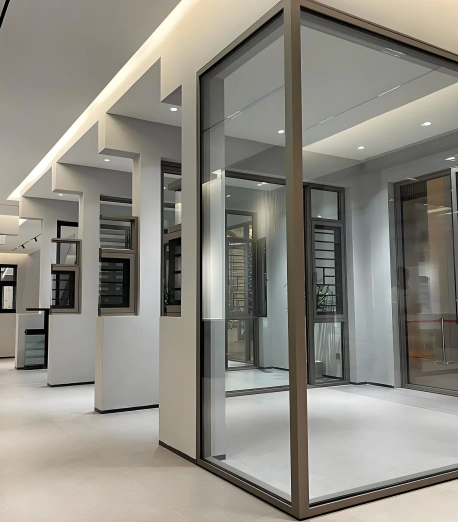
Architectural design has shifted toward slim-profile frames, expansive glass areas, and smart building interfaces. This shift introduces unique engineering challenges:
A world-class advanced manufacturing base delivering high-performance, lightweight extruded profiles with rigorous international certifications.
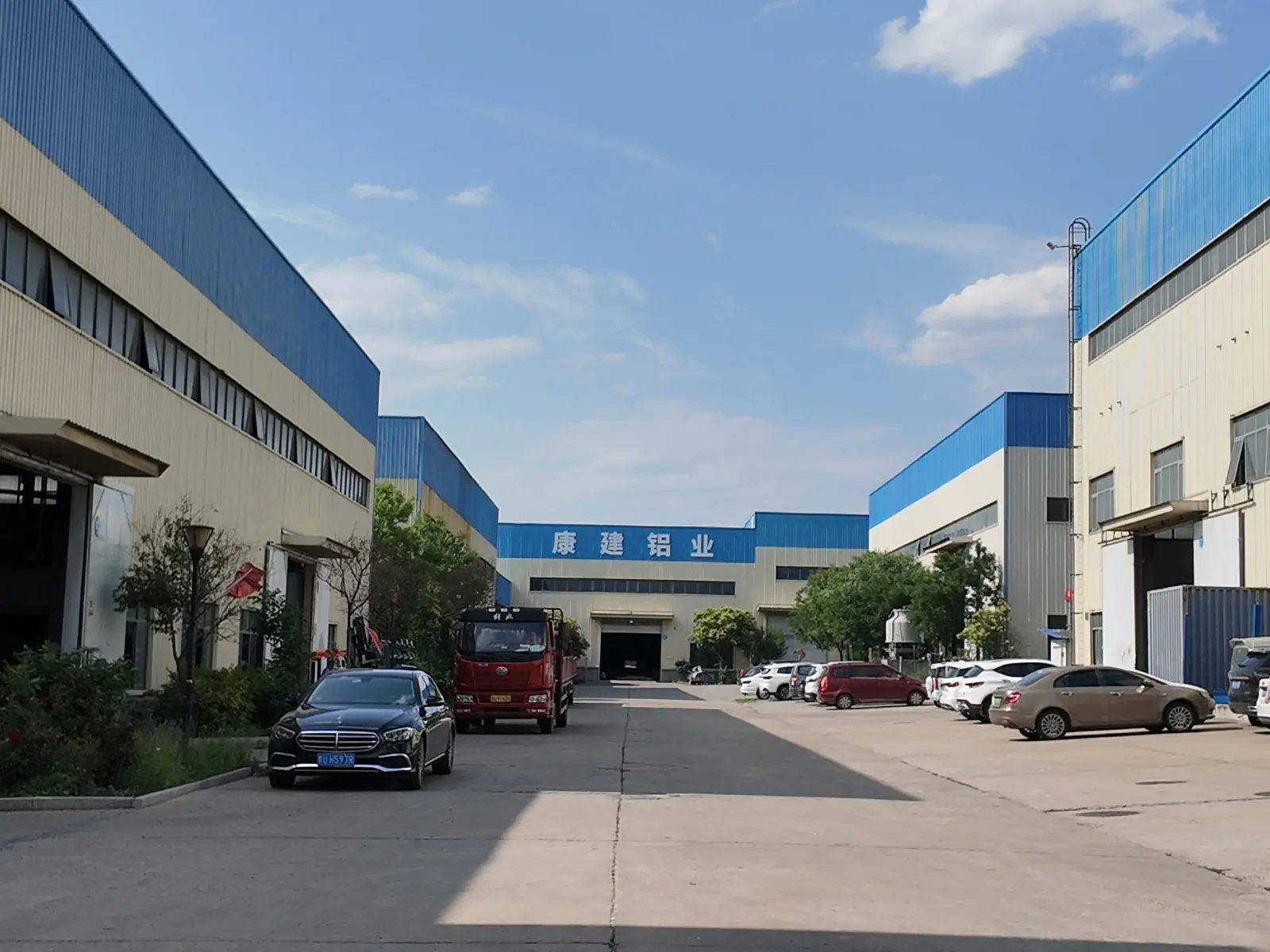
Established officially in 2022 and located in the Jimo District of Qingdao, China, Qingdao Kangjian Aluminum Industry Technology Co., Ltd. has grown to become the area's largest aluminum profile manufacturer. We operate an expansive 200-mu industrial production base, featuring 80,000 square meters of modern factories and 4,000 square meters of advanced corporate offices.
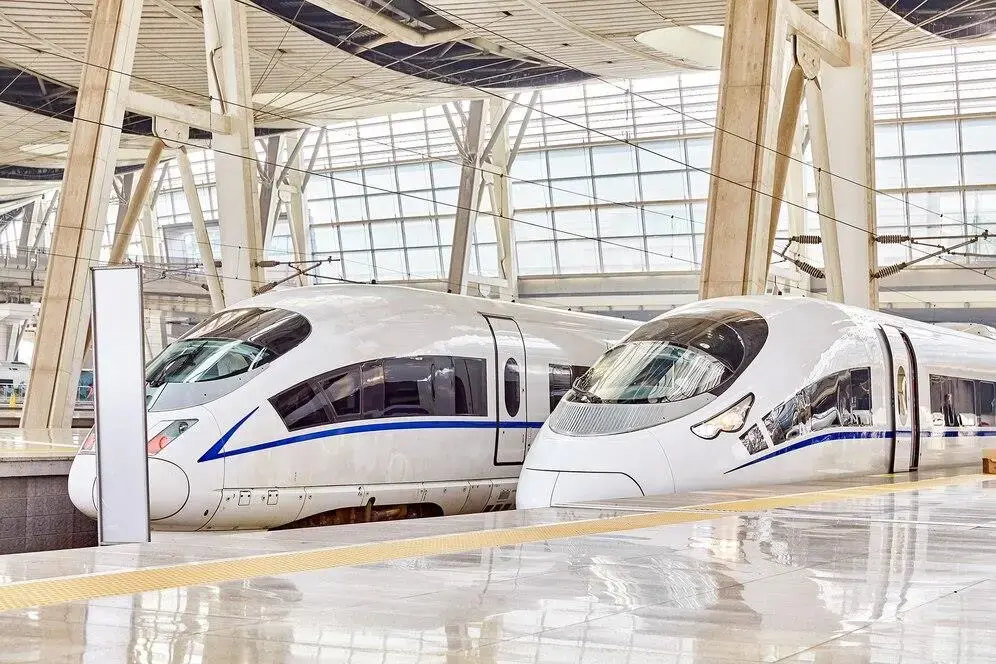
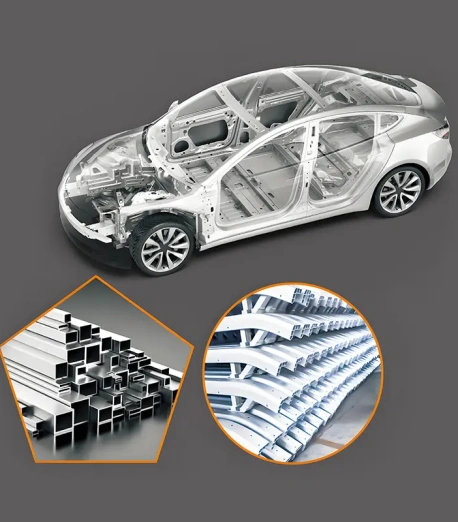
Our facility runs 5 precision extrusion lines (including 2500T, 1450T, 1150T, and two 700T extruders) with an annual output capacity of 15,000 tons of engineered profiles. We serve demanding sectors, including high-speed railways, subways, automotive parts, marine vessels, and energy-saving building projects.
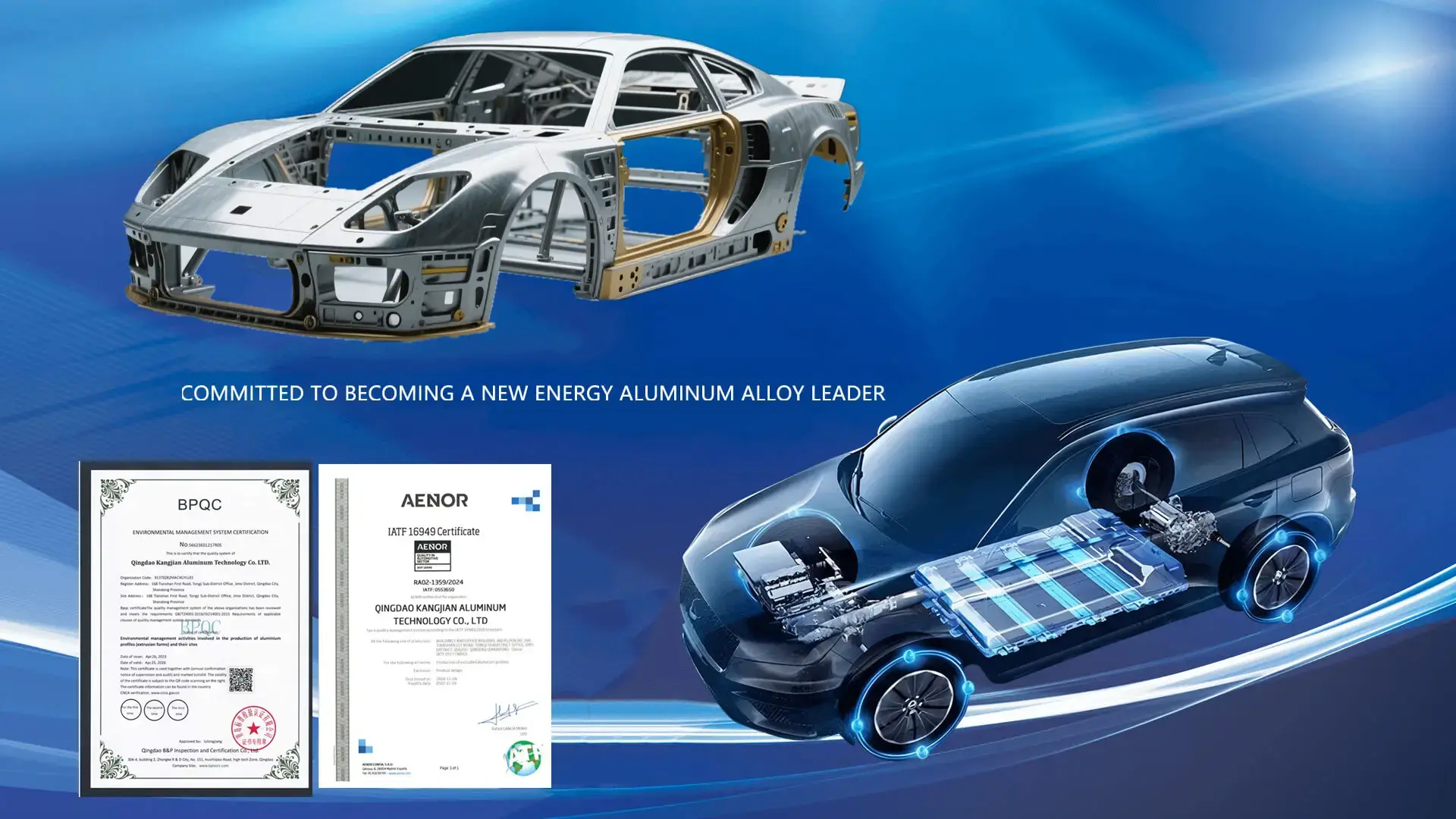
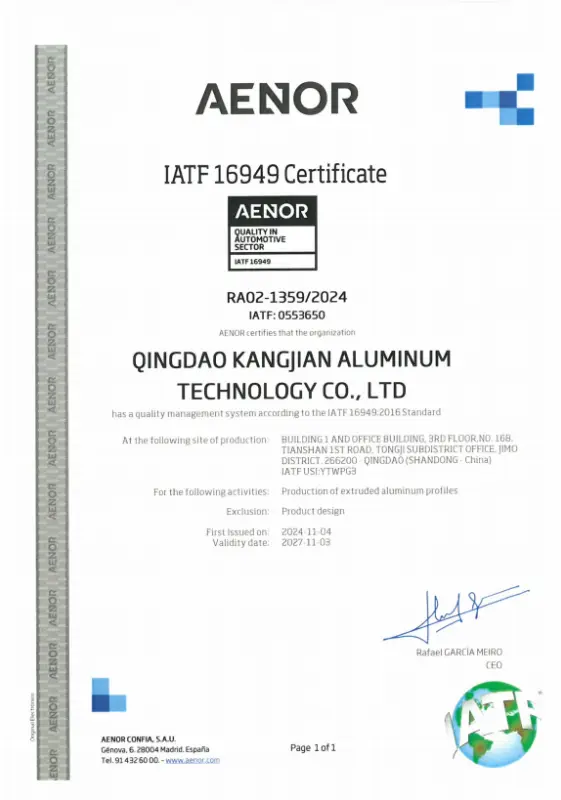
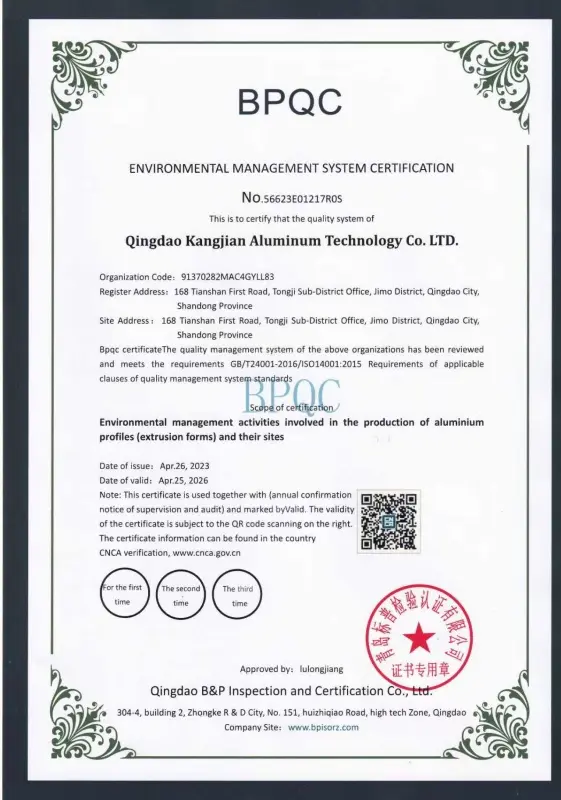
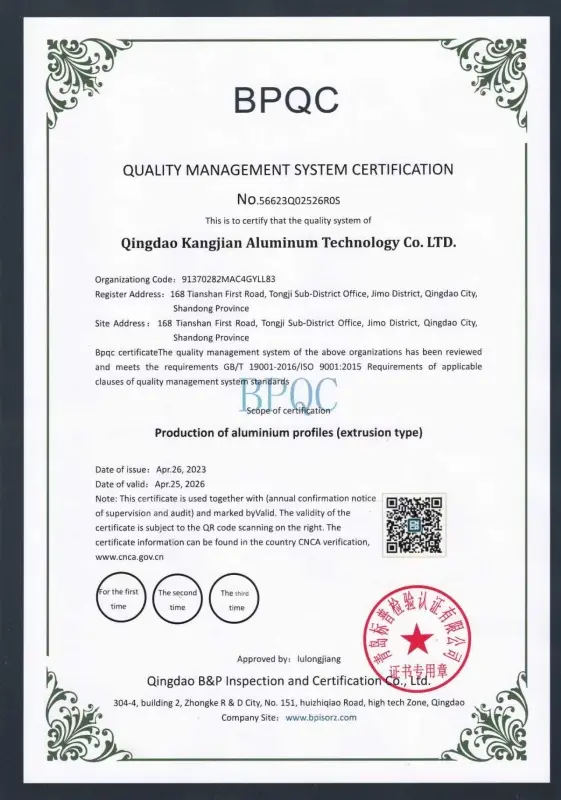
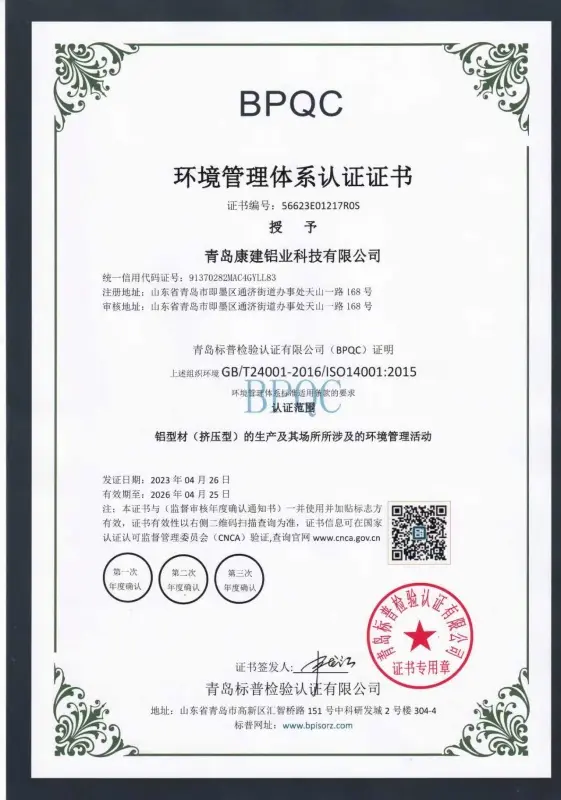
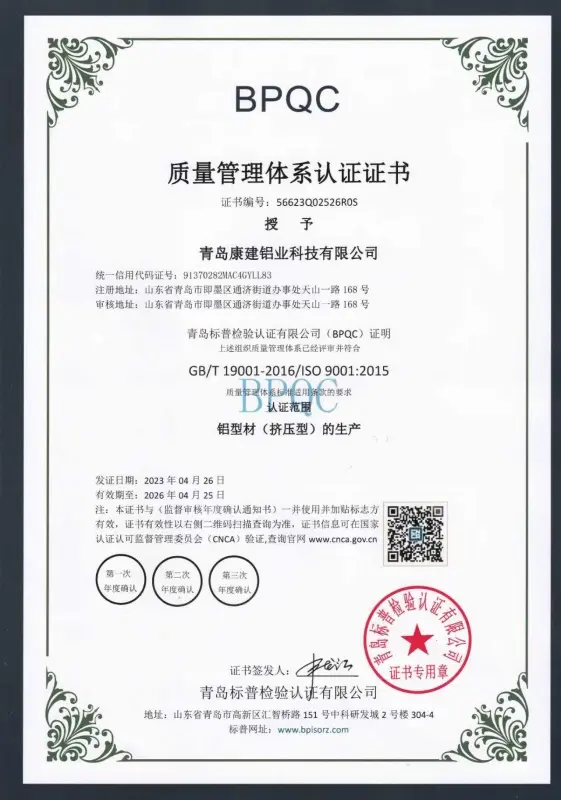
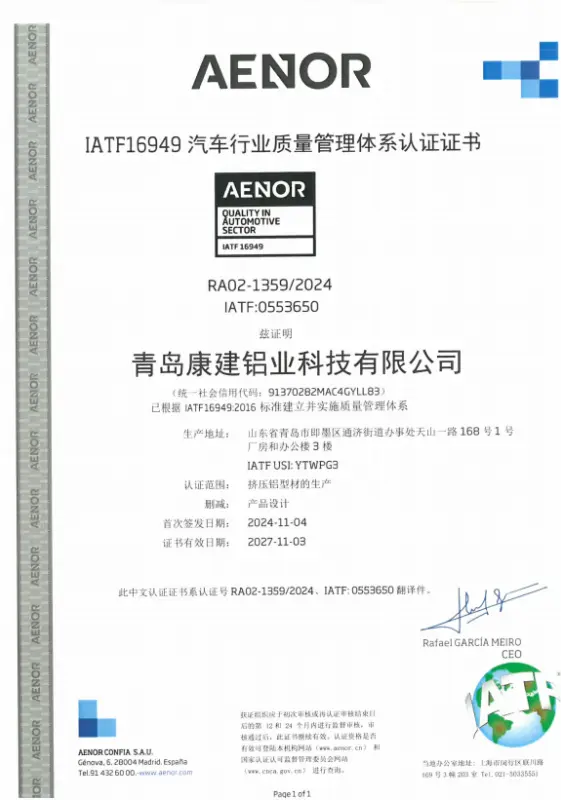
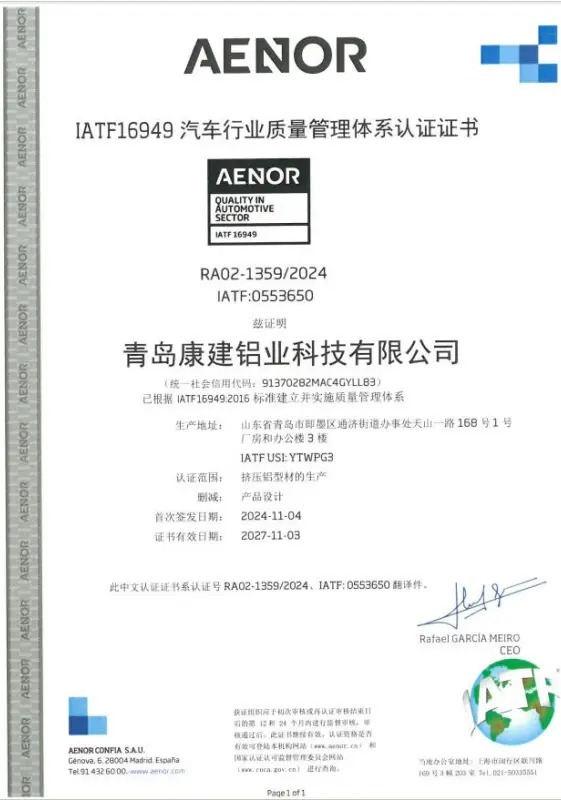
Our quality assurance is backed by a comprehensive array of international certifications: GB/T19001-2016/ISO9001, GB/T24001-2016/ISO14001, IATF16949 (Automotive), ISO22163 (Railway Industry), EN15085 (Welding), ISO3834 (Welding), AWS (Welding), and DIN6701 (Bonding).
In the highly competitive wholesale market, China's Factory 4.0 infrastructure offers significant cost-efficiency and reliable lead times. Qingdao Kangjian Aluminum integrates state-of-the-art automation and data systems to deliver premium products at scale:
Located near the deep-water Port of Qingdao, our facility provides streamlined logistics connections to East Asia, Europe, North America, and the Middle East. This strategic location ensures reliable delivery schedules for containerized and oversized break-bulk shipments alike.
Engineered structural profile categories for high-performance industrial, commercial, and architectural applications.
High-demand custom door frames, shower room extrusions, and linear lighting profiles for residential and commercial spaces.
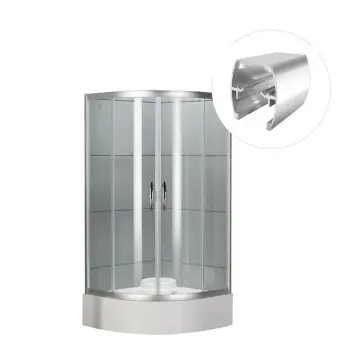
Qingdao Kangjian Aluminum Technology Co., Ltd. offers an extensive range of high-performance aluminum products designed for global architectural, industrial, and engineering applications. We specialize in custom surface treatments including mirror polishing and brilliant anodizing.
Learn More
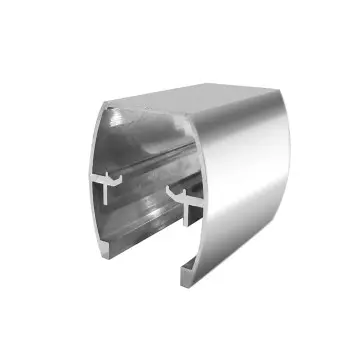
Engineered for wet room environments, our profiles feature enhanced anti-corrosion properties and tight dimensions. We support custom hardware integration and easy slot assemblies for major shower enclosure brands.
Learn More
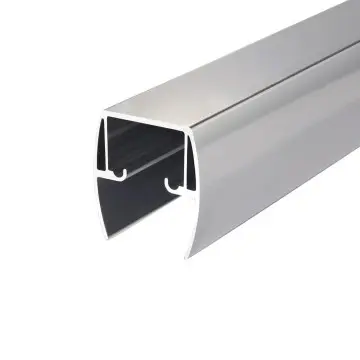
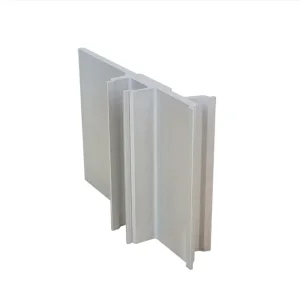
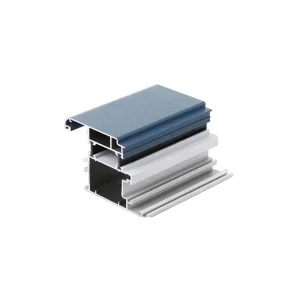
Standard architectural structural elements featuring optimal wall thickness and excellent structural integrity. Perfect for fabricating swing doors, sliding doors, and window sash assemblies.
Learn More
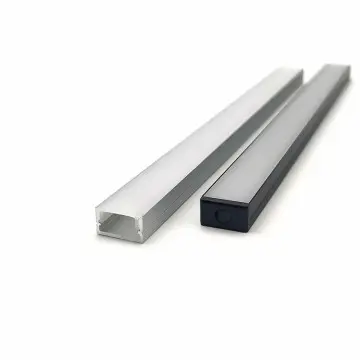
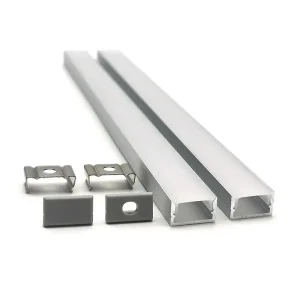
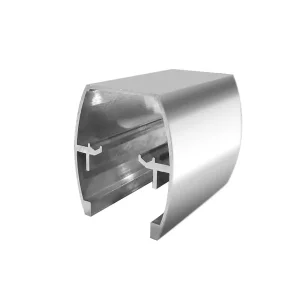
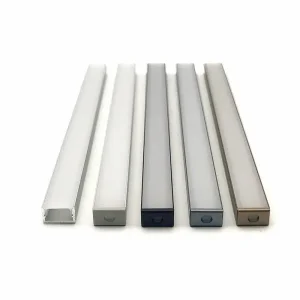
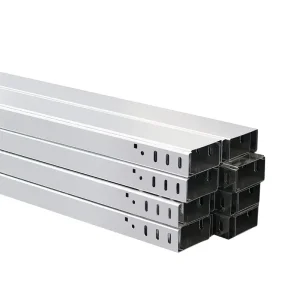
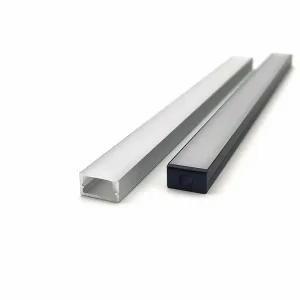
Designed for structural framing, decorative trim, and integrated linear LED housing. These profiles offer uniform material density and clean edges to simplify field fabrication.
Learn More
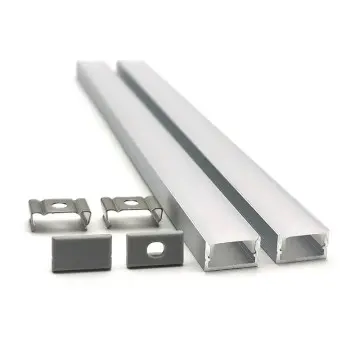
Optimized for thermal heat dissipation in high-output LED applications. Helps prevent thermal degradation of sensitive LED diodes in continuous architectural coves and commercial lighting fixtures.
Learn More
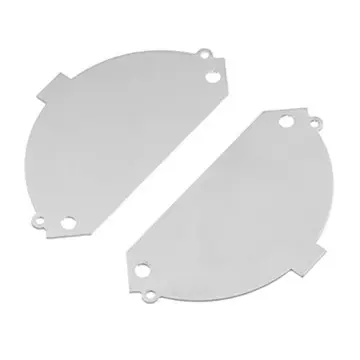
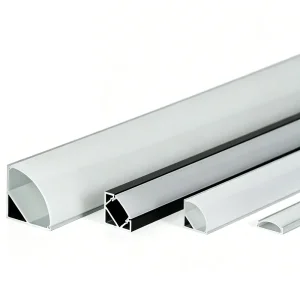
An ultra-slim, space-saving design with a 45-degree angle projection. Designed for modern cabinet, wardrobe, retail display showcase, and dynamic architectural accent lighting.
Learn More
Meeting rigorous international quality and engineering standards to ensure outstanding field performance and reliability.


Extruded aluminium door frames operate under varying loading conditions depending on the building classification and location. Proper specification helps prevent frame warping, structural issues, and drafts:
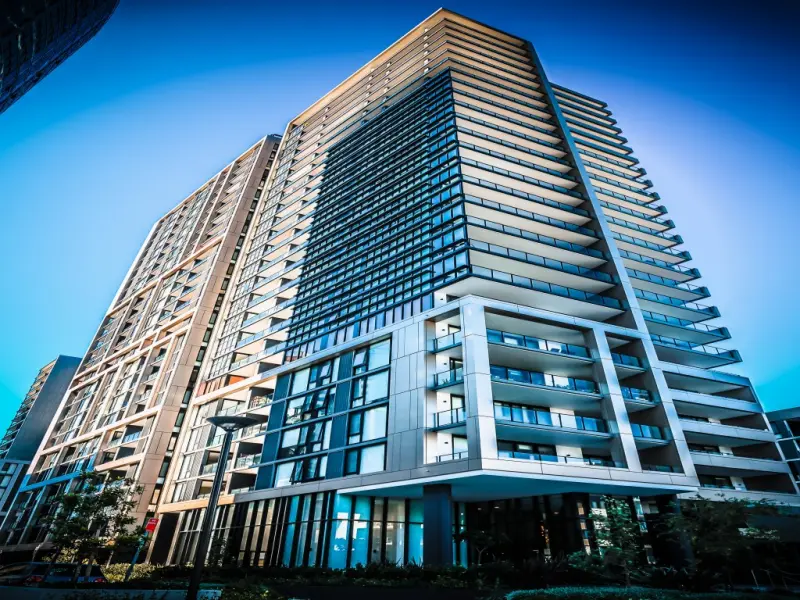
High-rise buildings face extreme wind-load pressures at upper elevations. Extruded frames must meet strict structural criteria, often utilizing 6061-T6 profiles with internal structural steel reinforcements to resist lateral deflection.
Airports, hospitals, and educational facilities require robust entries that withstand millions of cycles. Heavy-duty commercial aluminum frames, paired with thick-gauge pivot hinges and continuous gear hinges, prevent sag and maintain alignment.
Pharmaceutical and microelectronics facilities require flush-designed frames that prevent dust collection. They feature chemical-resistant anodized surfaces that stand up to frequent washdowns with harsh cleaning solutions.
In addition, specialized architectural projects require custom shapes. For example, modern sliding systems with concealed frames demand high-precision tracks. Because aluminum is highly formable during extrusion, structural profiles can be created with integrated screw splines, snap-on glazing beads, and weathering tracks. This reduces the number of parts needed, speeds up installation, and lowers labor costs.
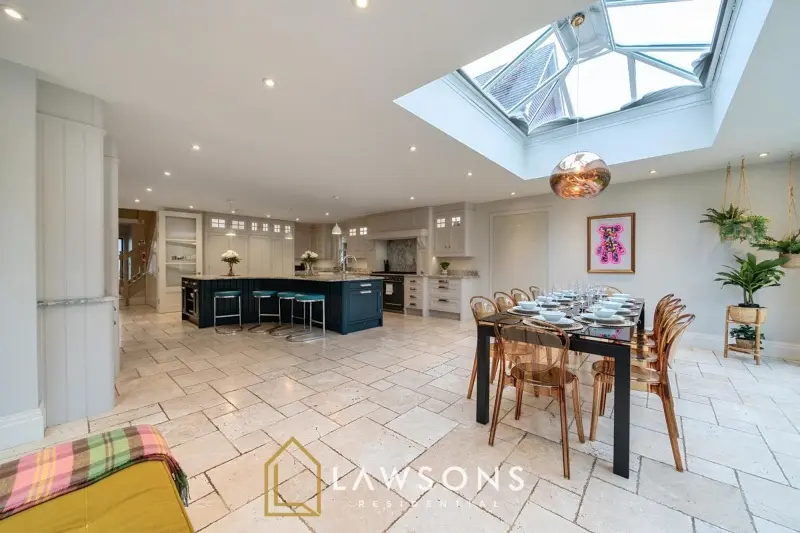
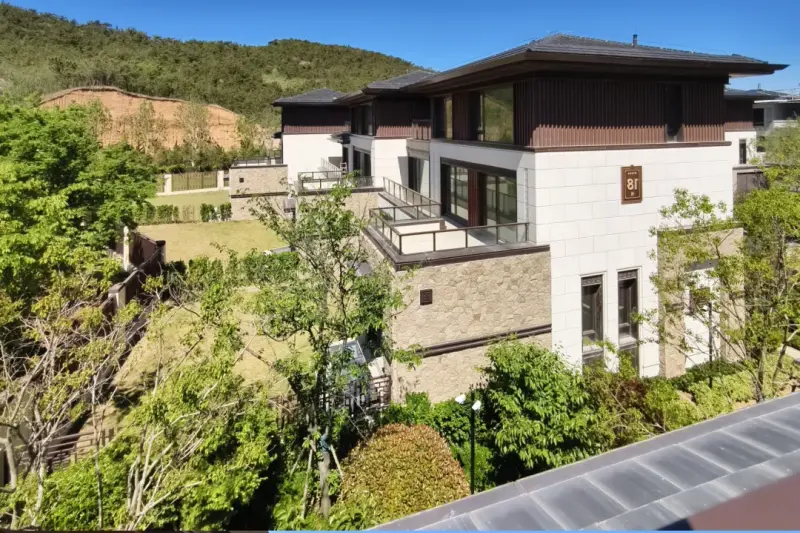
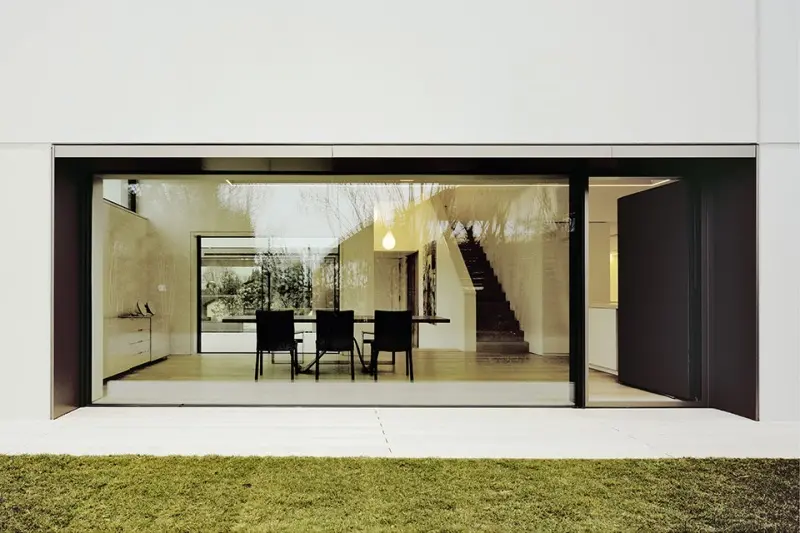
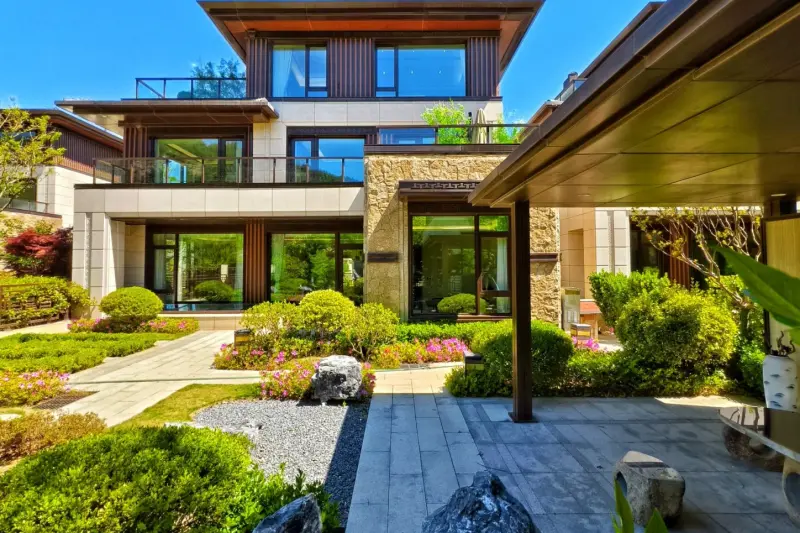
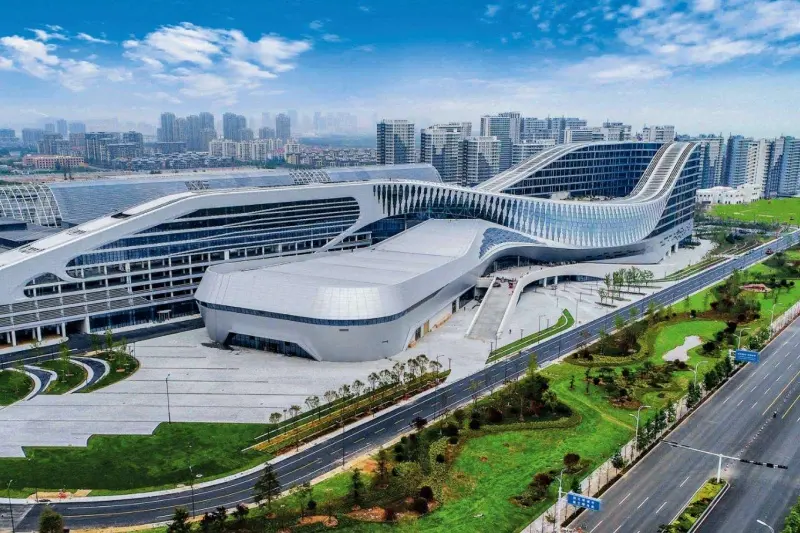
Showcasing our global projects, including marine ports, urban rail networks, automotive assemblies, and high-performance facades.
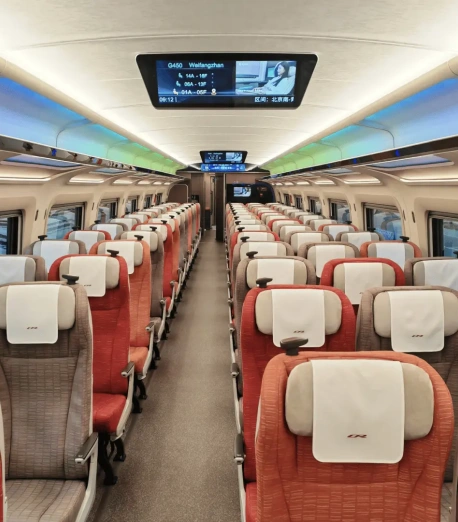
Answering key structural and logistical questions for B2B buyers and structural engineers.
A: 6063 offers excellent surface finish properties and extrudability, making it the industry standard for architectural window and door frames. It responds well to anodizing and powder coating. 6061 alloy provides higher yield and tensile strength, making it ideal for structural, heavy-duty industrial door frames or security gates that undergo high mechanical stresses.
A: Thermal breaks insert a low-conductivity material (typically PA66-GF25 polyamide) between the inner and outer aluminum profiles. This isolates the exterior and interior sections of the frame, reducing thermal conductivity, preventing condensation, and improving the building envelope's U-value.
A: Our facility is certified under ISO22163 (International Railway Industry Standard) and IATF16949 (Automotive Quality Management). We also hold EN15085 and AWS welding system certifications, which ensures our structural profiles meet safety-critical requirements for high-speed rail and light rail projects.
A: We recommend Class I anodizing (minimum 25-micron thickness) or high-performance PVDF liquid coatings (meeting AAMA 2605 specifications). These finishes protect the underlying aluminum substrate from salt-spray corrosion, chemical exposure, and intense UV degradation.
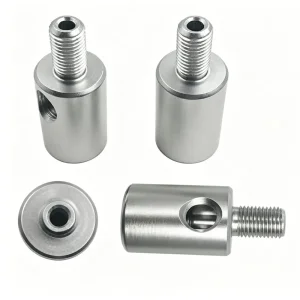
A: Yes. We operate a complete CAD-to-CNC workflow. This allows us to handle extrusion, automated chemical treatment, and high-precision CNC processes (milling, drilling, counterboring, and tap-threading) in one integrated facility. This keeps dimensional tolerances tight and helps avoid logistics delays.
A: Production lead times depend on volume and design complexity, but generally range from 20 to 30 days after drawing approval. We load containers directly at our facility in Jimo, Qingdao, and ship via the deep-water Port of Qingdao, which helps lower international transit times and freight costs.
Explore our full range of specialty industrial profiles, CNC-machined components, and heavy-duty structural alloys.